This was written about on 3/13/07 in this blog and it appears that the Washington Times does not read this blog. Sad, really.
The Washington Times has picked up and repeated the "hate speech" angle of trying to make a harmonious workplace.
Comments Welcome
Wednesday, June 13, 2007

Monday, June 04, 2007
Ray Bradbury Agrees
There is a book commonly read in High School, Fahrenheit 451, by Ray Bradbury.
Many High School teachers claim that it is about censorship, Sen. McCarthy and authoritarian government. This column wrote about how the book really illustrates the problem of a TV culture including the problem of focusing on non-important things.
It turns out that Ray Bradbury agrees. From an LA Weekly article:
Comments Welcome
Many High School teachers claim that it is about censorship, Sen. McCarthy and authoritarian government. This column wrote about how the book really illustrates the problem of a TV culture including the problem of focusing on non-important things.
It turns out that Ray Bradbury agrees. From an LA Weekly article:
Bradbury, a man living in the creative and industrial center of reality TV and one-hour dramas, says it is, in fact, a story about how television destroys interest in reading literature.Glad to I got the point of the book.
“Television gives you the dates of Napoleon, but not who he was,” Bradbury says, summarizing TV’s content with a single word that he spits out as an epithet: “factoids.” He says this while sitting in a room dominated by a gigantic flat-panel television broadcasting the Fox News Channel, muted, factoids crawling across the bottom of the screen.
His fear in 1953 that television would kill books has, he says, been partially confirmed by television’s effect on substance in the news. The front page of that day’s L.A. Times reported on the weekend box-office receipts for the third in the Spider-Man series of movies, seeming to prove his point.
Comments Welcome
Friday, April 20, 2007
False Prophet? You Bet!
There are many false prophets out there. One in particular has caught some attention and he has a website. Whois.net identifies the site owner as Vince Diehl.
Vince Diehl (not Vin Diesel) has had several websites over the years for who knows why. He also apparently claims to have had several prophecies and that the CIA kidnapped him and used the legal process to torture him and put him in jail.
Here is the text of a Complaint he has written in suing probably everyone he could think of (41 Defendants). Here is one where he was suing the United States in total. Here is one more, where he named about 8 defendants. It is recommended that you do not read the complaints as they are very poorly written [and long] screeds that make little or no sense and instead just make wild accusations.
His own reports are not even lucid. He makes himself out to be a prophet of the latter days persecuted by the U.S. Government because he is a prophet. He blames the CIA, the FBI, and corrupt officials from Texas for his problems and incarceration.
From a review of some of the web pages and from Conservative Cat, it appears that in the 1980's he had a computer business. There were some production and sales problems and it went out of business. There were 26 people (CIA plants if you ask Mr. Diehl) who were dissatisfied with the company, either for refunds, or the computers didn't work or something. (Twenty years later on the internet is a weak way of piecing a story together, so the real story is probably very different.) Mr. Diehl had already filed and gone through bankruptcy and moved to New Mexico. He was brought back to Texas for prosecution for theft of some kind and did some hard time. He is now the head of an apocalyptic cult.
Beware of false prophets.
Comments Welcome
Thursday, April 19, 2007
Don't Just Lay Down, Do Something!
Because of the nature of this topic (violence) there are some graphic descriptions and one bad word, the s-word if you want to know.
People with guns can slow down shooters who enter crowded areas. At least that is what was proven in Trolley Square. Fortunately there was an armed citizen, an off-duty cop who kept his firearm with him in spite of Trolley Square's "no-weapons allowed" policy. There is widespread agreement that the off-duty cop saved lives that day although we will never know exactly how many. It is a good thing he was there and that he fought back.
In the aftermath of the Virginia Tech shooting where 33 people were killed and many others were wounded, there has been some criticism about people who did not fight back when they had the chance. The students at the school have been referred to as "children" who need to be protected. College students are allowed to vote, buy guns, enter into contracts, buy a car, get a credit card, sign a lease or buy a house, get married, buy alcohol by their Senior year, get tattoos, have abortions, and be tried as adults if they commit crimes, so why not allow them to start making more adult decisions? The shooter was likely responsible for bomb threats earlier this year and chained some of the doors shut to prevent escape from the building.
There is one heroic story from the Virginia Tech shootings. A 76 year old professor that "was a Holocaust survivor who later escaped to Israel from Communist Romania". He stepped into the breach to defend his students and allow them to escape. He was shot to death. Too bad other students at the scene didn't join in, it would have saved more lives.
In 1989, the "Montreal Massacre" occurred. 14 women were killed, and an uncounted number of men had to turn in their man cards. Cowardice won the day instead of bravery. It is one thing to cooperate with an armed person, but altogether different once shots are fired. Here's what happened in Montreal according to the Crime Library (the writing leaves something to be desired, but as a narrative of what happened it is OK, contains graphic descriptions):
Our society idolizes soldiers, policemen, firefighters and others that place their lives on the line to save others. We need to be willing to do the same thing. Fight back, don't just wait until a bullet comes your way, do something about it!
It is true that every situation is different. Cooperation and non-violence can help defuse many situations, but once bullets fly it is time to fight back. Here is an example that you may find illuminating. It is a perfect example of what to do:
Hopefully we will all be as able and wise as Elder Oaks has shown us to act when we should act and to forbear when we should forbear. We will be forever grateful we were obedient to the spirit when it whispers to us. I add my testimony that by having our priorities in order and by listening to the spirit, we we never have to regret acting in self defense. In the name of Jesus Christ, Amen.
Comments Welcome
And now that my soul might have joy in you, and that my heart might leave this world with gladness because of you, that I might not be brought down with grief and sorrow to the grave, arise from the dust, my sons, and be men, and be determined in one mind and in one heart, united in all things, that ye may not come down into captivity;This is a truth that seems to have been forgotten in today's world. We are taught to not fight back, let the police handle it, and to just all get along. Some things are worth fighting for, and sometimes you just have to fight.
----- 2Nephi 1:21
People with guns can slow down shooters who enter crowded areas. At least that is what was proven in Trolley Square. Fortunately there was an armed citizen, an off-duty cop who kept his firearm with him in spite of Trolley Square's "no-weapons allowed" policy. There is widespread agreement that the off-duty cop saved lives that day although we will never know exactly how many. It is a good thing he was there and that he fought back.
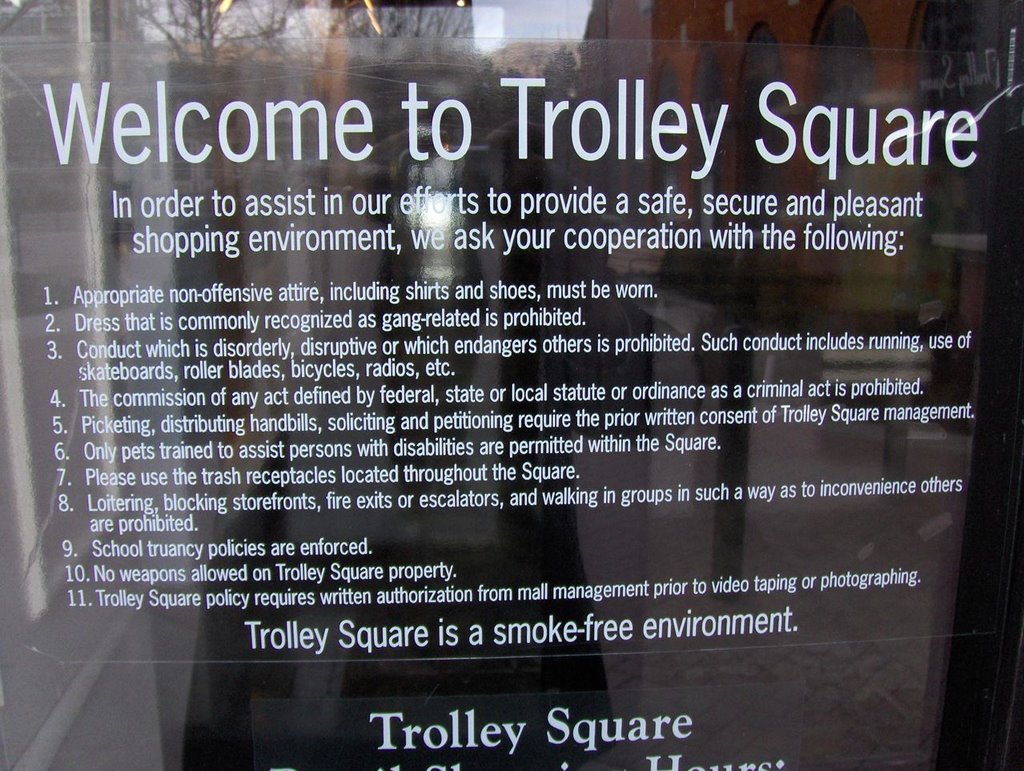
In the aftermath of the Virginia Tech shooting where 33 people were killed and many others were wounded, there has been some criticism about people who did not fight back when they had the chance. The students at the school have been referred to as "children" who need to be protected. College students are allowed to vote, buy guns, enter into contracts, buy a car, get a credit card, sign a lease or buy a house, get married, buy alcohol by their Senior year, get tattoos, have abortions, and be tried as adults if they commit crimes, so why not allow them to start making more adult decisions? The shooter was likely responsible for bomb threats earlier this year and chained some of the doors shut to prevent escape from the building.
There is one heroic story from the Virginia Tech shootings. A 76 year old professor that "was a Holocaust survivor who later escaped to Israel from Communist Romania". He stepped into the breach to defend his students and allow them to escape. He was shot to death. Too bad other students at the scene didn't join in, it would have saved more lives.
In 1989, the "Montreal Massacre" occurred. 14 women were killed, and an uncounted number of men had to turn in their man cards. Cowardice won the day instead of bravery. It is one thing to cooperate with an armed person, but altogether different once shots are fired. Here's what happened in Montreal according to the Crime Library (the writing leaves something to be desired, but as a narrative of what happened it is OK, contains graphic descriptions):
Lifting his rifle, he shot twice into the ceiling. It was no joke.He died at the scene. There were many opportunities people had to fight back, at risk to themselves that may have stopped the carnage. Pauses when he had to reload, when he was in the stairway, or even in the first classroom when the shooting began. He couldn't be good enough to shoot everyone. Maybe you die, maybe you don't.
"You're all a of bunch of feminists!" the man shouted, his eyes now alight with anger. "And I hate feminists!"
This time, he ordered the women to get up from their seats and the men to leave. A few moved to obey, but others remained confused. They wondered whether they should try to overpower the gunman, protect the women, or leave. The choice as to what was best was unclear. But after a few moments, the male students and teachers walked outside. In weeks to come, many of them would have nightmares about this moment, reliving it over and over, wishing they had acted differently. . . .
Nathalie Provost tried to tell him that they were not necessarily feminists, but this only enraged him. He lifted the rifle again and, as they screamed for mercy or tried to leap out of range, he methodically shot them from left to right. All were hit. Provost was shot three times.
The men waiting outside heard the shots and the agonized or frightened screams. They could hardly believe what was happening. At least 20 rounds had been fired. A few ran down the hall to raise an alarm and find someone who could call for help, while others waited.
Then the gunman came out and strode past them. No one tried to stop him. No one dared. He aimed the rifle precariously at them and they backed away, allowing him to leave. He fired at several other students on that floor, and three more were hit, including two women. Then he continued on his way. . . .
Inside a stairway, he bent over his gun. A student running down the steps heard him swear over his lack of bullets, fled past him, and then heard a shot fired. Apparently the man had reloaded. . . .
[he made his way to another classroom]
As people hid beneath desks, the madman strode up and down the rows as if looking for something. He shot until his clip was empty, reloaded, and shot again. . . .
The strange young man sat down next to the wounded woman, quietly pulled a knife from the sheath strapped to his body, and used it to stab her in the heart. She screamed in surprise and pain. This violent act shocked those who were watching. . . . He pulled the knife out and then plunged it in twice more until the girl lay silent, blood gushing from her wounds. . . .
Without a word, he laid his knife down, along with his remaining ammunition. He removed his cap and placed it on the table. The room was deathly still. People hardly dared to breathe. This man was up to something but his actions masked his intent. Still, he seemed emotionally spent, as if he had done what he came to do.
Even as the police prepared to enter the building downstairs, he removed his parka and wrapped it around the rifle's barrel. Someone in the building pulled the fire alarm, which jarred everyone.
The gunman said, "Ah, s[***]." He turned the rifle's barrel toward his own face, pressed the muzzle against his forehead, and pulled the trigger.
Our society idolizes soldiers, policemen, firefighters and others that place their lives on the line to save others. We need to be willing to do the same thing. Fight back, don't just wait until a bullet comes your way, do something about it!
It is true that every situation is different. Cooperation and non-violence can help defuse many situations, but once bullets fly it is time to fight back. Here is an example that you may find illuminating. It is a perfect example of what to do:
During my life I have had many experiences of being guided in what I should do and in being protected from injury and also from evil. The Lord’s protecting care has shielded me from the evil acts of others and has also protected me from surrendering to my own worst impulses. I enjoyed that protection one warm summer night on the streets of Chicago. I have never shared this experience in public. I do so now because it is a persuasive illustration of my subject.Two points if you realized this is the story of Elder Dallin H. Oaks of the Quorum of the Twelve Apostles. He cooperated until it would endanger his wife, and most of all, he listened to the spirit. He knew he could 'successfully' fight back, but that it would kill his attacker. Instead he was inspired and able to help talk his way out of the situation. He was willing to act, but was inspired to hold off for a wise purpose in the Lord.My wife, June, had attended a ward officers’ meeting. When I came to drive her home, she was accompanied by a sister we would take home on our way. She lived in the nearby Woodlawn area, which was the territory of a gang called the Blackstone Rangers.
I parked at the curb outside this sister’s apartment house and accompanied her into the lobby and up the stairs to her door. June remained in the car on 61st Street. She locked all of the doors, and I left the keys in the ignition in case she needed to drive away. We had lived on the south side of Chicago for quite a few years and were accustomed to such precautions.
Back in the lobby, and before stepping out into the street, I looked carefully in each direction. By the light of a nearby streetlight, I could see that the street was deserted except for three young men walking by. I waited until they were out of sight and then walked quickly toward our car.
As I came to the driver’s side and paused for June to unlock the door, I saw one of these young men running back toward me. He had something in his right hand, and I knew what it would be. There was no time to get into the car and drive away before he came within range.
Fortunately, as June leaned across to open the door, she glanced through the back window and saw this fellow coming around the end of the car with a gun in his hand. Wisely, she did not unlock the door. For the next two or three minutes, which seemed like an eternity, she was a horrified spectator to an event happening at her eye level, just outside the driver’s window.
The young man pushed the gun against my stomach and said, “Give me your money.” I took the wallet out of my pocket and showed him it was empty. I wasn’t even wearing a watch I could offer him because my watchband had broken earlier that day. I offered him some coins I had in my pocket, but he growled a rejection.
“Give me your car keys,” he demanded. “They are in the car,” I told him. “Tell her to open the car,” he replied. For a moment I considered the new possibilities that would present, and then refused. He was furious. He jabbed me in the stomach with his gun and said, “Do it, or I’ll kill you.”
Although this event happened twenty-two years ago, I remember it as clearly as if it were yesterday. I read somewhere that nothing concentrates the mind as wonderfully as having someone stand in front of you with a deadly weapon and tell you he intends to kill you.
When I refused, the young robber repeated his demands, this time emphasizing them with an angrier tone and more motion with his gun. I remember thinking that he probably wouldn’t shoot me on purpose, but if he wasn’t careful in the way he kept jabbing that gun into my stomach, he might shoot me by mistake. His gun looked like a cheap one, and I was nervous about its firing mechanism.
“Give me your money.” “I don’t have any.” “Give me your car keys.” “They’re in the car.” “Tell her to open the car.” “I won’t do it.” “I’ll kill you if you don’t.” “I won’t do it.”
Inside the car June couldn’t hear the conversation, but she could see the action with the gun. She agonized over what she should do. Should she unlock the door? Should she honk the horn? Should she drive away? Everything she considered seemed to have the possibility of making matters worse, so she just waited and prayed. Then a peaceful feeling came over her. She felt it would be all right.
Then, for the first time, I saw the possibility of help. From behind the robber, a city bus approached. It stopped about twenty feet away. A passenger stepped off and scurried away. The driver looked directly at me, but I could see that he was not going to offer any assistance.
While this was happening behind the young robber, out of his view, he became nervous and distracted. His gun wavered from my stomach until its barrel pointed slightly to my left. My arm was already partly raised, and with a quick motion I could seize the gun and struggle with him without the likelihood of being shot. I was taller and heavier than this young man, and at that time of my life was somewhat athletic. I had no doubt that I could prevail in a quick wrestling match if I could get his gun out of the contest.
Just as I was about to make my move, I had a unique experience. I did not see anything or hear anything, but I knew something. I knew what would happen if I grabbed that gun. We would struggle, and I would turn the gun into that young man’s chest. It would fire, and he would die. I also understood that I must not have the blood of that young man on my conscience for the rest of my life.
I relaxed, and as the bus pulled away I followed an impulse to put my right hand on his shoulder and give him a lecture. June and I had some teenage children at that time, and giving lectures came naturally.
“Look here,” I said. “This isn’t right. What you’re doing just isn’t right. The next car might be a policeman, and you could get killed or sent to jail for this.”
With the gun back in my stomach, the young robber replied to my lecture by going through his demands for the third time. But this time his voice was subdued. When he offered the final threat to kill me, he didn’t sound persuasive. When I refused again, he hesitated for a moment and then stuck the gun in his pocket and ran away. June unlocked the door, and we drove off, uttering a prayer of thanks. We had experienced the kind of miraculous protection illustrated in the Bible stories I had read as a boy.
I have often pondered the significance of that event in relation to the responsibilities that came later in my life. Less than a year after that August night, I was chosen as president of Brigham Young University. Almost fourteen years after that experience, I received my present calling.
Hopefully we will all be as able and wise as Elder Oaks has shown us to act when we should act and to forbear when we should forbear. We will be forever grateful we were obedient to the spirit when it whispers to us. I add my testimony that by having our priorities in order and by listening to the spirit, we we never have to regret acting in self defense. In the name of Jesus Christ, Amen.
Comments Welcome
Monday, April 16, 2007
The Gender Wars Continue
A new book is out, the title is a play on words from the original 20th Century Feminist Classic: The Feminine Mystique by Betty Friedan. The new book is called The Feminine Mistake by Leslie Bennett.
This new book is still feminist in nature, although the author insists that it has nothing to do with feminism. Just because a book toes the feminist line about working outside of the home and spends lots of words (and scientific studies) encouraging women with children to work outside of the home doesn't mean it is a feminist book, does it?
Most of the studies have to do with statistics. There is a certain number of marriages that end in divorce, men die, or become unemployed, and other financial issues and this book is here to convince you that just because bad things happen, all women are being stupid for giving up their careers and staying home with their children.
Lest you think that the "being stupid" description of her attitude is too harsh and unfair, here she is in her own words when describing the negative response she has received from stay at home moms and publications that cater to them.
Here is another article by the author of the book about how deciding to stay home from work is not merely a lifestyle choice, but something much more.
From reading the articles by the author (and not the book, so there may be some errors), it is far better for women to work because the time when children are small and life is hectic really is just a few years and you can make it through that. Work is fulfilling, having money gives you leverage in your marriage and at the end of the day because bad things happen you can only depend on yourself to get things done so keep working.
One article notes that the book is dedicated to four people, and the second person (even in front of her own daughter) is Norma, the babysitter-nanny-substitute caregiver because the author continued to pursue her own career. This article is a well written rebuttal with this gem:
(spelling British in the original). The New Yorker also has a review of the book that points out many of the fallacies that Leslie Bennetts advances in her book.
The best caregiver of children is their mother. Of course there are a few exceptions, but to argue that women should have to work and love to work outside of the home is counter factual and asinine. If for some reason you find yourself compelled to believe polling data and statistics, you may want to read this book.
Comments Welcome
This new book is still feminist in nature, although the author insists that it has nothing to do with feminism. Just because a book toes the feminist line about working outside of the home and spends lots of words (and scientific studies) encouraging women with children to work outside of the home doesn't mean it is a feminist book, does it?
Most of the studies have to do with statistics. There is a certain number of marriages that end in divorce, men die, or become unemployed, and other financial issues and this book is here to convince you that just because bad things happen, all women are being stupid for giving up their careers and staying home with their children.
Lest you think that the "being stupid" description of her attitude is too harsh and unfair, here she is in her own words when describing the negative response she has received from stay at home moms and publications that cater to them.
But other publications catering primarily to stay-at-home mothers are terrified of offending them, and any coverage has to be tailored to accommodate their sensitivities, real or imagined. "We don't want to upset the stay-at-home mommies," more than one editor told me in a patronizing tone of voice that suggested the conspiratorial whisper of adults who are trying not to wake the cranky children.The same thing is happening with organizations that are interested in speaking engagements. Groups of professional women are eager to hear what I have to say, but those whose membership includes many stay-at-home mothers are afraid to risk their wrath by offering potentially upsetting information. Institutions that rely on the volunteer efforts of stay-at-home moms are particularly leery of presenting any program that might challenge their assumptions and rouse their ire.
As a result, the information contained in my book is being disseminated widely among working women, but stay-at-home wives -- the ones most at risk, and therefore the ones I most wanted to reach with my findings -- are being insulated from the truth by well-meaning decision-makers who are, in my opinion, infantilizing them. Yes, it's true that women who don't work are often so defensive about their choice that they've helped to create this regrettable climate. But do they really want to be treated like children who must be shielded from distressing information?
Here is an account of a public "debate" at the New York public library where there was mostly a lot of agreement and head nodding apparently.
Here is another article by the author of the book about how deciding to stay home from work is not merely a lifestyle choice, but something much more.
From reading the articles by the author (and not the book, so there may be some errors), it is far better for women to work because the time when children are small and life is hectic really is just a few years and you can make it through that. Work is fulfilling, having money gives you leverage in your marriage and at the end of the day because bad things happen you can only depend on yourself to get things done so keep working.
One article notes that the book is dedicated to four people, and the second person (even in front of her own daughter) is Norma, the babysitter-nanny-substitute caregiver because the author continued to pursue her own career. This article is a well written rebuttal with this gem:
Bennetts offers the stay-at-home mothers a challenge: give up your idealised views of the perfect marriage and the perfect job and embrace chaos. So what if your house is a mess, and you're not quite on top of your emails? So what if you are constantly exhausted? "A lot of women conceptualise the whole issue in ways that don't serve them very well. They say: 'Oh well, it's a question of having it all, and if I can't have it all I might as well give up and go home'." Bennetts suggests they settle for just being good enough - and for getting by.
To Bennetts, this domestic satisfaction is a travesty. Although she claims that her argument is an economic one, rather than one based on “values,” she believes not only that women have to work but that they should want to. She’s also convinced that working mothers are the best kind that children can have, teaching resourcefulness and independence by example, and demonstrating the virtue of engaging in work that one loves. A baby boomer to the core, Bennetts is happiest when she is quoting exultant, successful older women who have juggled work and child care and have come out the other side saying things like “You know what? I think my kids really benefited.” In her view, “a combination of good child care and an egalitarian marriage” is equal to the challenge of running a household, and she points to herself as a writer for Vanity Fair who works from home and also makes dinner for her kids every night, at least on those nights when she’s not interviewing Jennifer Aniston about being yet another woman who didn’t expect her husband to leave her.Also, from The New Yorker article:
She barely considers the possibility that a woman might clear-sightedly find the rearing of her children the most rewarding work she can do, not out of a sense of self-sacrifice but out of a sense of personal fulfillment, a position eloquently characterized a few years ago in the book “Maternal Desire,” by the psychologist Daphne de Marneffe. Nor does she consider whether the flight from the workplace might be a justified rejection of a culture that assumes that parenting can be dealt with in the margins of one’s work life. There is a real economic cost when someone gives up work in favor of being a mother, as Ann Crittenden skillfully outlined six years ago in her book “The Price of Motherhood”; and that cost does, as Bennetts argues, become acute if a woman is unexpectedly widowed or divorced. But to some extent such circumstances can be hedged against with insurance policies and the efforts of a decent matrimonial lawyer. For many women, a contented life of motherhood and homemaking, even given the uncertainties, may offer better odds of satisfaction than the guaranteed stress of unloved work and the difficulties, emotional and practical, of surrendering to another the task of caring for one’s children.These kinds of arguments will continue because people like to argue, not because of the merits of Ms. Bennetts' point of view.
The best caregiver of children is their mother. Of course there are a few exceptions, but to argue that women should have to work and love to work outside of the home is counter factual and asinine. If for some reason you find yourself compelled to believe polling data and statistics, you may want to read this book.
Comments Welcome
Subscribe to:
Posts (Atom)