There are many false prophets out there. One in particular has caught some attention and he has a website. Whois.net identifies the site owner as Vince Diehl.
Vince Diehl (not Vin Diesel) has had several websites over the years for who knows why. He also apparently claims to have had several prophecies and that the CIA kidnapped him and used the legal process to torture him and put him in jail.
Here is the text of a Complaint he has written in suing probably everyone he could think of (41 Defendants). Here is one where he was suing the United States in total. Here is one more, where he named about 8 defendants. It is recommended that you do not read the complaints as they are very poorly written [and long] screeds that make little or no sense and instead just make wild accusations.
His own reports are not even lucid. He makes himself out to be a prophet of the latter days persecuted by the U.S. Government because he is a prophet. He blames the CIA, the FBI, and corrupt officials from Texas for his problems and incarceration.
From a review of some of the web pages and from Conservative Cat, it appears that in the 1980's he had a computer business. There were some production and sales problems and it went out of business. There were 26 people (CIA plants if you ask Mr. Diehl) who were dissatisfied with the company, either for refunds, or the computers didn't work or something. (Twenty years later on the internet is a weak way of piecing a story together, so the real story is probably very different.) Mr. Diehl had already filed and gone through bankruptcy and moved to New Mexico. He was brought back to Texas for prosecution for theft of some kind and did some hard time. He is now the head of an apocalyptic cult.
Beware of false prophets.
Comments Welcome
Friday, April 20, 2007

Thursday, April 19, 2007
Don't Just Lay Down, Do Something!
Because of the nature of this topic (violence) there are some graphic descriptions and one bad word, the s-word if you want to know.
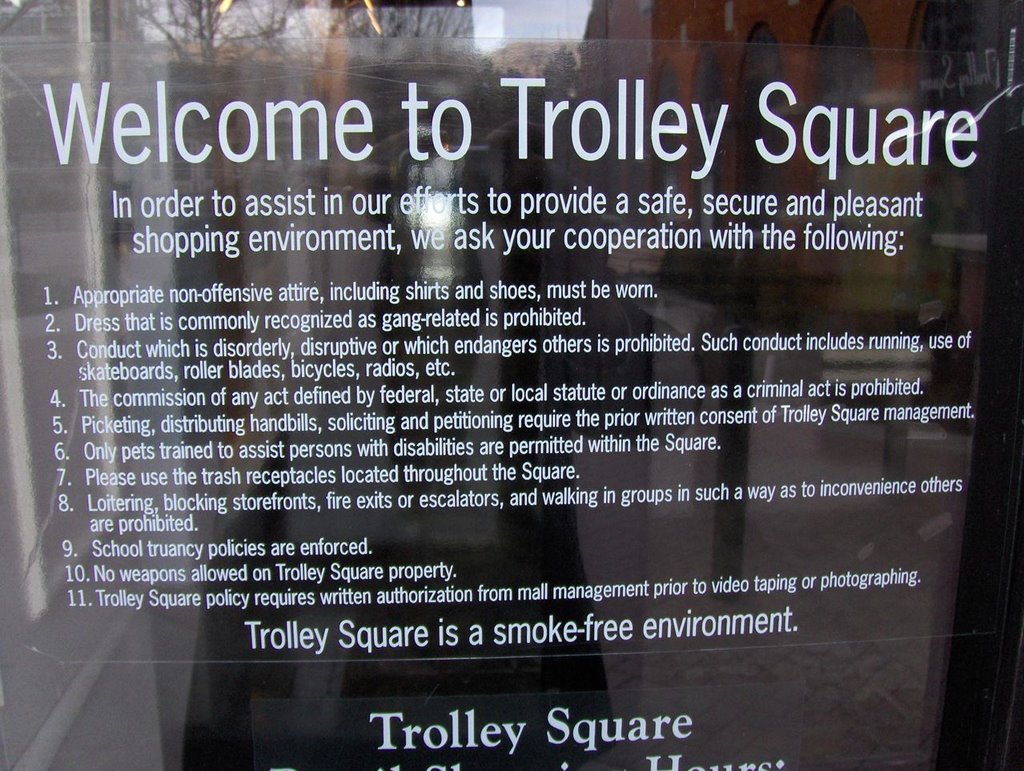
People with guns can slow down shooters who enter crowded areas. At least that is what was proven in Trolley Square. Fortunately there was an armed citizen, an off-duty cop who kept his firearm with him in spite of Trolley Square's "no-weapons allowed" policy. There is widespread agreement that the off-duty cop saved lives that day although we will never know exactly how many. It is a good thing he was there and that he fought back.
In the aftermath of the Virginia Tech shooting where 33 people were killed and many others were wounded, there has been some criticism about people who did not fight back when they had the chance. The students at the school have been referred to as "children" who need to be protected. College students are allowed to vote, buy guns, enter into contracts, buy a car, get a credit card, sign a lease or buy a house, get married, buy alcohol by their Senior year, get tattoos, have abortions, and be tried as adults if they commit crimes, so why not allow them to start making more adult decisions? The shooter was likely responsible for bomb threats earlier this year and chained some of the doors shut to prevent escape from the building.
There is one heroic story from the Virginia Tech shootings. A 76 year old professor that "was a Holocaust survivor who later escaped to Israel from Communist Romania". He stepped into the breach to defend his students and allow them to escape. He was shot to death. Too bad other students at the scene didn't join in, it would have saved more lives.
In 1989, the "Montreal Massacre" occurred. 14 women were killed, and an uncounted number of men had to turn in their man cards. Cowardice won the day instead of bravery. It is one thing to cooperate with an armed person, but altogether different once shots are fired. Here's what happened in Montreal according to the Crime Library (the writing leaves something to be desired, but as a narrative of what happened it is OK, contains graphic descriptions):
Our society idolizes soldiers, policemen, firefighters and others that place their lives on the line to save others. We need to be willing to do the same thing. Fight back, don't just wait until a bullet comes your way, do something about it!
It is true that every situation is different. Cooperation and non-violence can help defuse many situations, but once bullets fly it is time to fight back. Here is an example that you may find illuminating. It is a perfect example of what to do:
Hopefully we will all be as able and wise as Elder Oaks has shown us to act when we should act and to forbear when we should forbear. We will be forever grateful we were obedient to the spirit when it whispers to us. I add my testimony that by having our priorities in order and by listening to the spirit, we we never have to regret acting in self defense. In the name of Jesus Christ, Amen.
Comments Welcome
And now that my soul might have joy in you, and that my heart might leave this world with gladness because of you, that I might not be brought down with grief and sorrow to the grave, arise from the dust, my sons, and be men, and be determined in one mind and in one heart, united in all things, that ye may not come down into captivity;This is a truth that seems to have been forgotten in today's world. We are taught to not fight back, let the police handle it, and to just all get along. Some things are worth fighting for, and sometimes you just have to fight.
----- 2Nephi 1:21
People with guns can slow down shooters who enter crowded areas. At least that is what was proven in Trolley Square. Fortunately there was an armed citizen, an off-duty cop who kept his firearm with him in spite of Trolley Square's "no-weapons allowed" policy. There is widespread agreement that the off-duty cop saved lives that day although we will never know exactly how many. It is a good thing he was there and that he fought back.
In the aftermath of the Virginia Tech shooting where 33 people were killed and many others were wounded, there has been some criticism about people who did not fight back when they had the chance. The students at the school have been referred to as "children" who need to be protected. College students are allowed to vote, buy guns, enter into contracts, buy a car, get a credit card, sign a lease or buy a house, get married, buy alcohol by their Senior year, get tattoos, have abortions, and be tried as adults if they commit crimes, so why not allow them to start making more adult decisions? The shooter was likely responsible for bomb threats earlier this year and chained some of the doors shut to prevent escape from the building.
There is one heroic story from the Virginia Tech shootings. A 76 year old professor that "was a Holocaust survivor who later escaped to Israel from Communist Romania". He stepped into the breach to defend his students and allow them to escape. He was shot to death. Too bad other students at the scene didn't join in, it would have saved more lives.
In 1989, the "Montreal Massacre" occurred. 14 women were killed, and an uncounted number of men had to turn in their man cards. Cowardice won the day instead of bravery. It is one thing to cooperate with an armed person, but altogether different once shots are fired. Here's what happened in Montreal according to the Crime Library (the writing leaves something to be desired, but as a narrative of what happened it is OK, contains graphic descriptions):
Lifting his rifle, he shot twice into the ceiling. It was no joke.He died at the scene. There were many opportunities people had to fight back, at risk to themselves that may have stopped the carnage. Pauses when he had to reload, when he was in the stairway, or even in the first classroom when the shooting began. He couldn't be good enough to shoot everyone. Maybe you die, maybe you don't.
"You're all a of bunch of feminists!" the man shouted, his eyes now alight with anger. "And I hate feminists!"
This time, he ordered the women to get up from their seats and the men to leave. A few moved to obey, but others remained confused. They wondered whether they should try to overpower the gunman, protect the women, or leave. The choice as to what was best was unclear. But after a few moments, the male students and teachers walked outside. In weeks to come, many of them would have nightmares about this moment, reliving it over and over, wishing they had acted differently. . . .
Nathalie Provost tried to tell him that they were not necessarily feminists, but this only enraged him. He lifted the rifle again and, as they screamed for mercy or tried to leap out of range, he methodically shot them from left to right. All were hit. Provost was shot three times.
The men waiting outside heard the shots and the agonized or frightened screams. They could hardly believe what was happening. At least 20 rounds had been fired. A few ran down the hall to raise an alarm and find someone who could call for help, while others waited.
Then the gunman came out and strode past them. No one tried to stop him. No one dared. He aimed the rifle precariously at them and they backed away, allowing him to leave. He fired at several other students on that floor, and three more were hit, including two women. Then he continued on his way. . . .
Inside a stairway, he bent over his gun. A student running down the steps heard him swear over his lack of bullets, fled past him, and then heard a shot fired. Apparently the man had reloaded. . . .
[he made his way to another classroom]
As people hid beneath desks, the madman strode up and down the rows as if looking for something. He shot until his clip was empty, reloaded, and shot again. . . .
The strange young man sat down next to the wounded woman, quietly pulled a knife from the sheath strapped to his body, and used it to stab her in the heart. She screamed in surprise and pain. This violent act shocked those who were watching. . . . He pulled the knife out and then plunged it in twice more until the girl lay silent, blood gushing from her wounds. . . .
Without a word, he laid his knife down, along with his remaining ammunition. He removed his cap and placed it on the table. The room was deathly still. People hardly dared to breathe. This man was up to something but his actions masked his intent. Still, he seemed emotionally spent, as if he had done what he came to do.
Even as the police prepared to enter the building downstairs, he removed his parka and wrapped it around the rifle's barrel. Someone in the building pulled the fire alarm, which jarred everyone.
The gunman said, "Ah, s[***]." He turned the rifle's barrel toward his own face, pressed the muzzle against his forehead, and pulled the trigger.
Our society idolizes soldiers, policemen, firefighters and others that place their lives on the line to save others. We need to be willing to do the same thing. Fight back, don't just wait until a bullet comes your way, do something about it!
It is true that every situation is different. Cooperation and non-violence can help defuse many situations, but once bullets fly it is time to fight back. Here is an example that you may find illuminating. It is a perfect example of what to do:
During my life I have had many experiences of being guided in what I should do and in being protected from injury and also from evil. The Lord’s protecting care has shielded me from the evil acts of others and has also protected me from surrendering to my own worst impulses. I enjoyed that protection one warm summer night on the streets of Chicago. I have never shared this experience in public. I do so now because it is a persuasive illustration of my subject.Two points if you realized this is the story of Elder Dallin H. Oaks of the Quorum of the Twelve Apostles. He cooperated until it would endanger his wife, and most of all, he listened to the spirit. He knew he could 'successfully' fight back, but that it would kill his attacker. Instead he was inspired and able to help talk his way out of the situation. He was willing to act, but was inspired to hold off for a wise purpose in the Lord.My wife, June, had attended a ward officers’ meeting. When I came to drive her home, she was accompanied by a sister we would take home on our way. She lived in the nearby Woodlawn area, which was the territory of a gang called the Blackstone Rangers.
I parked at the curb outside this sister’s apartment house and accompanied her into the lobby and up the stairs to her door. June remained in the car on 61st Street. She locked all of the doors, and I left the keys in the ignition in case she needed to drive away. We had lived on the south side of Chicago for quite a few years and were accustomed to such precautions.
Back in the lobby, and before stepping out into the street, I looked carefully in each direction. By the light of a nearby streetlight, I could see that the street was deserted except for three young men walking by. I waited until they were out of sight and then walked quickly toward our car.
As I came to the driver’s side and paused for June to unlock the door, I saw one of these young men running back toward me. He had something in his right hand, and I knew what it would be. There was no time to get into the car and drive away before he came within range.
Fortunately, as June leaned across to open the door, she glanced through the back window and saw this fellow coming around the end of the car with a gun in his hand. Wisely, she did not unlock the door. For the next two or three minutes, which seemed like an eternity, she was a horrified spectator to an event happening at her eye level, just outside the driver’s window.
The young man pushed the gun against my stomach and said, “Give me your money.” I took the wallet out of my pocket and showed him it was empty. I wasn’t even wearing a watch I could offer him because my watchband had broken earlier that day. I offered him some coins I had in my pocket, but he growled a rejection.
“Give me your car keys,” he demanded. “They are in the car,” I told him. “Tell her to open the car,” he replied. For a moment I considered the new possibilities that would present, and then refused. He was furious. He jabbed me in the stomach with his gun and said, “Do it, or I’ll kill you.”
Although this event happened twenty-two years ago, I remember it as clearly as if it were yesterday. I read somewhere that nothing concentrates the mind as wonderfully as having someone stand in front of you with a deadly weapon and tell you he intends to kill you.
When I refused, the young robber repeated his demands, this time emphasizing them with an angrier tone and more motion with his gun. I remember thinking that he probably wouldn’t shoot me on purpose, but if he wasn’t careful in the way he kept jabbing that gun into my stomach, he might shoot me by mistake. His gun looked like a cheap one, and I was nervous about its firing mechanism.
“Give me your money.” “I don’t have any.” “Give me your car keys.” “They’re in the car.” “Tell her to open the car.” “I won’t do it.” “I’ll kill you if you don’t.” “I won’t do it.”
Inside the car June couldn’t hear the conversation, but she could see the action with the gun. She agonized over what she should do. Should she unlock the door? Should she honk the horn? Should she drive away? Everything she considered seemed to have the possibility of making matters worse, so she just waited and prayed. Then a peaceful feeling came over her. She felt it would be all right.
Then, for the first time, I saw the possibility of help. From behind the robber, a city bus approached. It stopped about twenty feet away. A passenger stepped off and scurried away. The driver looked directly at me, but I could see that he was not going to offer any assistance.
While this was happening behind the young robber, out of his view, he became nervous and distracted. His gun wavered from my stomach until its barrel pointed slightly to my left. My arm was already partly raised, and with a quick motion I could seize the gun and struggle with him without the likelihood of being shot. I was taller and heavier than this young man, and at that time of my life was somewhat athletic. I had no doubt that I could prevail in a quick wrestling match if I could get his gun out of the contest.
Just as I was about to make my move, I had a unique experience. I did not see anything or hear anything, but I knew something. I knew what would happen if I grabbed that gun. We would struggle, and I would turn the gun into that young man’s chest. It would fire, and he would die. I also understood that I must not have the blood of that young man on my conscience for the rest of my life.
I relaxed, and as the bus pulled away I followed an impulse to put my right hand on his shoulder and give him a lecture. June and I had some teenage children at that time, and giving lectures came naturally.
“Look here,” I said. “This isn’t right. What you’re doing just isn’t right. The next car might be a policeman, and you could get killed or sent to jail for this.”
With the gun back in my stomach, the young robber replied to my lecture by going through his demands for the third time. But this time his voice was subdued. When he offered the final threat to kill me, he didn’t sound persuasive. When I refused again, he hesitated for a moment and then stuck the gun in his pocket and ran away. June unlocked the door, and we drove off, uttering a prayer of thanks. We had experienced the kind of miraculous protection illustrated in the Bible stories I had read as a boy.
I have often pondered the significance of that event in relation to the responsibilities that came later in my life. Less than a year after that August night, I was chosen as president of Brigham Young University. Almost fourteen years after that experience, I received my present calling.
Hopefully we will all be as able and wise as Elder Oaks has shown us to act when we should act and to forbear when we should forbear. We will be forever grateful we were obedient to the spirit when it whispers to us. I add my testimony that by having our priorities in order and by listening to the spirit, we we never have to regret acting in self defense. In the name of Jesus Christ, Amen.
Comments Welcome
Monday, April 16, 2007
The Gender Wars Continue
A new book is out, the title is a play on words from the original 20th Century Feminist Classic: The Feminine Mystique by Betty Friedan. The new book is called The Feminine Mistake by Leslie Bennett.
This new book is still feminist in nature, although the author insists that it has nothing to do with feminism. Just because a book toes the feminist line about working outside of the home and spends lots of words (and scientific studies) encouraging women with children to work outside of the home doesn't mean it is a feminist book, does it?
Most of the studies have to do with statistics. There is a certain number of marriages that end in divorce, men die, or become unemployed, and other financial issues and this book is here to convince you that just because bad things happen, all women are being stupid for giving up their careers and staying home with their children.
Lest you think that the "being stupid" description of her attitude is too harsh and unfair, here she is in her own words when describing the negative response she has received from stay at home moms and publications that cater to them.
Here is another article by the author of the book about how deciding to stay home from work is not merely a lifestyle choice, but something much more.
From reading the articles by the author (and not the book, so there may be some errors), it is far better for women to work because the time when children are small and life is hectic really is just a few years and you can make it through that. Work is fulfilling, having money gives you leverage in your marriage and at the end of the day because bad things happen you can only depend on yourself to get things done so keep working.
One article notes that the book is dedicated to four people, and the second person (even in front of her own daughter) is Norma, the babysitter-nanny-substitute caregiver because the author continued to pursue her own career. This article is a well written rebuttal with this gem:
(spelling British in the original). The New Yorker also has a review of the book that points out many of the fallacies that Leslie Bennetts advances in her book.
The best caregiver of children is their mother. Of course there are a few exceptions, but to argue that women should have to work and love to work outside of the home is counter factual and asinine. If for some reason you find yourself compelled to believe polling data and statistics, you may want to read this book.
Comments Welcome
This new book is still feminist in nature, although the author insists that it has nothing to do with feminism. Just because a book toes the feminist line about working outside of the home and spends lots of words (and scientific studies) encouraging women with children to work outside of the home doesn't mean it is a feminist book, does it?
Most of the studies have to do with statistics. There is a certain number of marriages that end in divorce, men die, or become unemployed, and other financial issues and this book is here to convince you that just because bad things happen, all women are being stupid for giving up their careers and staying home with their children.
Lest you think that the "being stupid" description of her attitude is too harsh and unfair, here she is in her own words when describing the negative response she has received from stay at home moms and publications that cater to them.
But other publications catering primarily to stay-at-home mothers are terrified of offending them, and any coverage has to be tailored to accommodate their sensitivities, real or imagined. "We don't want to upset the stay-at-home mommies," more than one editor told me in a patronizing tone of voice that suggested the conspiratorial whisper of adults who are trying not to wake the cranky children.The same thing is happening with organizations that are interested in speaking engagements. Groups of professional women are eager to hear what I have to say, but those whose membership includes many stay-at-home mothers are afraid to risk their wrath by offering potentially upsetting information. Institutions that rely on the volunteer efforts of stay-at-home moms are particularly leery of presenting any program that might challenge their assumptions and rouse their ire.
As a result, the information contained in my book is being disseminated widely among working women, but stay-at-home wives -- the ones most at risk, and therefore the ones I most wanted to reach with my findings -- are being insulated from the truth by well-meaning decision-makers who are, in my opinion, infantilizing them. Yes, it's true that women who don't work are often so defensive about their choice that they've helped to create this regrettable climate. But do they really want to be treated like children who must be shielded from distressing information?
Here is an account of a public "debate" at the New York public library where there was mostly a lot of agreement and head nodding apparently.
Here is another article by the author of the book about how deciding to stay home from work is not merely a lifestyle choice, but something much more.
From reading the articles by the author (and not the book, so there may be some errors), it is far better for women to work because the time when children are small and life is hectic really is just a few years and you can make it through that. Work is fulfilling, having money gives you leverage in your marriage and at the end of the day because bad things happen you can only depend on yourself to get things done so keep working.
One article notes that the book is dedicated to four people, and the second person (even in front of her own daughter) is Norma, the babysitter-nanny-substitute caregiver because the author continued to pursue her own career. This article is a well written rebuttal with this gem:
Bennetts offers the stay-at-home mothers a challenge: give up your idealised views of the perfect marriage and the perfect job and embrace chaos. So what if your house is a mess, and you're not quite on top of your emails? So what if you are constantly exhausted? "A lot of women conceptualise the whole issue in ways that don't serve them very well. They say: 'Oh well, it's a question of having it all, and if I can't have it all I might as well give up and go home'." Bennetts suggests they settle for just being good enough - and for getting by.
To Bennetts, this domestic satisfaction is a travesty. Although she claims that her argument is an economic one, rather than one based on “values,” she believes not only that women have to work but that they should want to. She’s also convinced that working mothers are the best kind that children can have, teaching resourcefulness and independence by example, and demonstrating the virtue of engaging in work that one loves. A baby boomer to the core, Bennetts is happiest when she is quoting exultant, successful older women who have juggled work and child care and have come out the other side saying things like “You know what? I think my kids really benefited.” In her view, “a combination of good child care and an egalitarian marriage” is equal to the challenge of running a household, and she points to herself as a writer for Vanity Fair who works from home and also makes dinner for her kids every night, at least on those nights when she’s not interviewing Jennifer Aniston about being yet another woman who didn’t expect her husband to leave her.Also, from The New Yorker article:
She barely considers the possibility that a woman might clear-sightedly find the rearing of her children the most rewarding work she can do, not out of a sense of self-sacrifice but out of a sense of personal fulfillment, a position eloquently characterized a few years ago in the book “Maternal Desire,” by the psychologist Daphne de Marneffe. Nor does she consider whether the flight from the workplace might be a justified rejection of a culture that assumes that parenting can be dealt with in the margins of one’s work life. There is a real economic cost when someone gives up work in favor of being a mother, as Ann Crittenden skillfully outlined six years ago in her book “The Price of Motherhood”; and that cost does, as Bennetts argues, become acute if a woman is unexpectedly widowed or divorced. But to some extent such circumstances can be hedged against with insurance policies and the efforts of a decent matrimonial lawyer. For many women, a contented life of motherhood and homemaking, even given the uncertainties, may offer better odds of satisfaction than the guaranteed stress of unloved work and the difficulties, emotional and practical, of surrendering to another the task of caring for one’s children.These kinds of arguments will continue because people like to argue, not because of the merits of Ms. Bennetts' point of view.
The best caregiver of children is their mother. Of course there are a few exceptions, but to argue that women should have to work and love to work outside of the home is counter factual and asinine. If for some reason you find yourself compelled to believe polling data and statistics, you may want to read this book.
Comments Welcome
Thursday, April 12, 2007
The Federal Reserve Bank
The Federal Reserve Bank (FRB) is the Central Bank of the United States. The FRB says that is in an independent bank, but others say it is a private bank. Perhaps it is more like old Ma Bell, the only phone company in business, but government regulated aka a government regulated monopoly. Whatever the legal status of the FRB is, it is not really helping the people of the United States.
Congress, in Article I of the Constitution was vested with the authority to coin money and to regulate the value thereof. We are now in a position where the Treasury prints money, gives it to the FRB, and the FRB distributes it out to the people.
The U.S. Treasury actually keeps its' money in the FRB (look at the definition under "fiscal agency services) and checks drawn on the U.S. Treasury are redeemed from the FRB. Talk about having a large client. When the U.S. Government runs out of money in any given year, it tries to sell U.S. Savings Bonds and when not enough of them are sold the FRB buys them from the Government. Then the Government deposits the money back into their FRB account to continue writing checks from the U.S. Treasury account. Where can anyone sign up for that gig?
In case you missed it, when we have a deficit the U.S. borrows the money via the sale of U.S. Savings bonds and then pays it back with interest, with much of sales to the FRB. The FRB essentially has an endless supply of money as will be explained here. It is maddening and confusing and hopefully this will be explained properly.
Fractional Reserve Banking is one of the keys to the seemingly unlimited supply of money at the FRB. In the United States and all over the world, your bank does not have to have enough money on the books to cover all of their deposits. They only need to keep a fraction of the money deposited there. Small lending institutions (deposit accounts of less than $48.3 Million) only need to keep 3% of their deposits in reserve. If the institution has deposits of less than $7 Million, no reserve is necessary. For most larger institutions, the required reserve is a much healthier 10% reserve. Oh, and there is no reserve on your savings account. In case you wanted to find a bank with different policies not controlled by the FRB, Congress took care of that with the Monetary Control Act of 1980 and allowed the FRB to control reserve requirements "for all depository institutions, regardless of Fed membership status". Hooray for big government. The FRB freely admits that the point of all this power is for the FRB to have control over money supply.
The process of money expansion is explained in more detail than you probably want to know in a 40 page booklet titled Modern Money Mechanics produced and distributed by the Federal Reserve Bank of Chicago. A bank only has to maintain a fraction of their total deposit account funds. If the bank has $100,000 in deposits and the reserve requirement is only 10%, then the bank only has to hold onto $10,000 and it can lend out the other $90,000. If a person gets a loan for that $90,000 and then deposits it in their bank, the next bank can write a loan for up to $81,000. If the process continues, that original $100,000 will eventually become $1,000,000. Keep in mind that funds and money are flowing continuously through several banks, accounts, loans, and other transfers. Electronic banking has only made this process easier.
Something important to note is thatdebt loan making is the instrumentality for making the money grow. The FRB monitors banks to ensure that their reserve requirements are met. If a bank is running short because they have been very successful at making loans or other seasonal monetary issues, they can borrow from other banks to meet their requirements, or borrow from the FRB to meet their reserve requirements. The interest rate that banks charge each other to meet the reserve requirements is called the fed funds rate, the rate that the FRB charges to banks borrowing funds is called the discount rate. By banks borrowing money short term to meet their regulatory reserve minimums, banks can make loans forever with money they don't really have just as long as the sufficient reserves are there.
To recap: banks take in money belonging to their account holder, they loan out the same money, they charge interest on the money they have loaned out, then they borrow money in the short term if they have not kept their "reserve" of the money that belongs to all of their account holders. You could buy a car with a loan from money the bank doesn't really have and then default and the bank gets a car with money they never owned in the first place. On a larger scale, this is happening with real estate. Just think about that for a minute, financial institutions can loan out money they don't own and if the debtor defaults, the collateral becomes the property of the institution. In any other setting, that would be fraud, or theft by deception, or something. The system is broken.
The bottom line for the FRB is to control the flow and the amount of money available. You may be wondering where the banks are supposed to keep their reserves and how does the FRB monitor it so well? The banks are supposed to keep their money reserves in their own accounts with the FRB. Yes, the FRB is not just the bank for the U.S. Treasury, but it is the central bank for all of the banks in the United States. On a lesser scale, the banks do keep some reserves in their vaults so they have cash on hand, but when so much more money is flowing electronically, there is no way to keep all of that cash on hand anywhere.
So when the FRB needs to control the money supply, what does it do? The process is explained in Modern Money Mechanics. We have seen how money grows through loans. When *new* money is needed in the market, the FRB buys securities (bonds, Treasury Bills, or something) from a private dealer. The private dealer then takes an FRB check to their bank, the bank then redeems it from the FRB! It is like new money entering the system because it *is* new money to the system that can then expand to 10 times the original amount issued. That is how the FRB manipulates the fed funds rate. The banks lend to each other based on a free floating money market and when there are more dollars to go around they don't charge as much for their loans to each other to make their minimum reserve amounts. The FRB has been doing this for a long time and they are good at it. When the FRB needs to restrict the amount of money, they sell their securities in exchange for dollars and don't send any of it back out. It takes money out of the system and makes loans more expensive or possibly not available at any price.
Unlimited Money?
With the FRB having all of this money, and deposits from the U.S. Government, and only having a 10% reserve requirement (if any) and the U.S. Mint available to print money when it is needed, and any money loaned to the U.S. getting deposited right back into the institution, the FRB really does have an almost completely unlimited pool of money to work with. It is not like any other bank in the United States, but it is like all of the other Central National banks all over the world and the IMF.
What are Dollars Worth?
One of the goals of the FRB was to protect and maintain the value of the U.S. Dollar. So how have they done since they were created in 1913? A dollar nowadays is worth about a nickel in 1913. Check for yourself.
The U.S. went off the Gold Standard in 1933 and confiscated private gold holdings except for "rare coins" (probably held by rich people). U.S. Citizens could no longer redeem their dollars for gold. In 1971 the gold standard was completely abandoned and foreign exchange dollars were not backed by gold either. There is nothing backing the Dollar these days and nothing that makes cash inherently valuable.
Federal Reserve Notes used to be some sort of deposit receipt as evidence that gold was deposited with the FRB. From a publication from the FRB:
Is this a form of slavery?
By law, we have to accept dollars as our money for exchange. People go to work to pay for homes, cars, small businesses, credit cards, clothing, and other things and largely financed by debt. Housing prices are out of control and the purchasing power of the dollar is getting weaker so we have to work harder. Our taxes go to the federal government and the money is paid to the FRB to take care of outstanding debt and interest. Our house, car, and credit card payments are going to lending institutions who did not own the money in the first place and we are encouraged to keep spending to keep the economy going so we can all keep our jobs so we have a place to live.
The money that we earn is going to banks, credit card companies, the government, and other people in high places that work to keep the system going just the way it is. They like the system just fine because it keeps the working masses in their place. Because of Fractional Banking and the legal ability for a lending institution to create loans with money they *don't* have a moral right to lend and if they fall short, they lend to each other at much *lower* rates, it has made us a nation of wage slaves.
For more reading about the Federal Reserve:
http://www.apfn.org/apfn/reserve.htm (it has a video too)
http://www.the7thfire.com/Politics%20and%20History/Federal-Reserve.html
http://sonic.net/sentinel/naij2.html
No wonder the Church of Jesus Christ of Latter Day Saints has told us to get out of debt.
Comments Welcome
Congress, in Article I of the Constitution was vested with the authority to coin money and to regulate the value thereof. We are now in a position where the Treasury prints money, gives it to the FRB, and the FRB distributes it out to the people.
The U.S. Treasury actually keeps its' money in the FRB (look at the definition under "fiscal agency services) and checks drawn on the U.S. Treasury are redeemed from the FRB. Talk about having a large client. When the U.S. Government runs out of money in any given year, it tries to sell U.S. Savings Bonds and when not enough of them are sold the FRB buys them from the Government. Then the Government deposits the money back into their FRB account to continue writing checks from the U.S. Treasury account. Where can anyone sign up for that gig?
In case you missed it, when we have a deficit the U.S. borrows the money via the sale of U.S. Savings bonds and then pays it back with interest, with much of sales to the FRB. The FRB essentially has an endless supply of money as will be explained here. It is maddening and confusing and hopefully this will be explained properly.
Fractional Reserve Banking is one of the keys to the seemingly unlimited supply of money at the FRB. In the United States and all over the world, your bank does not have to have enough money on the books to cover all of their deposits. They only need to keep a fraction of the money deposited there. Small lending institutions (deposit accounts of less than $48.3 Million) only need to keep 3% of their deposits in reserve. If the institution has deposits of less than $7 Million, no reserve is necessary. For most larger institutions, the required reserve is a much healthier 10% reserve. Oh, and there is no reserve on your savings account. In case you wanted to find a bank with different policies not controlled by the FRB, Congress took care of that with the Monetary Control Act of 1980 and allowed the FRB to control reserve requirements "for all depository institutions, regardless of Fed membership status". Hooray for big government. The FRB freely admits that the point of all this power is for the FRB to have control over money supply.
The process of money expansion is explained in more detail than you probably want to know in a 40 page booklet titled Modern Money Mechanics produced and distributed by the Federal Reserve Bank of Chicago. A bank only has to maintain a fraction of their total deposit account funds. If the bank has $100,000 in deposits and the reserve requirement is only 10%, then the bank only has to hold onto $10,000 and it can lend out the other $90,000. If a person gets a loan for that $90,000 and then deposits it in their bank, the next bank can write a loan for up to $81,000. If the process continues, that original $100,000 will eventually become $1,000,000. Keep in mind that funds and money are flowing continuously through several banks, accounts, loans, and other transfers. Electronic banking has only made this process easier.
Something important to note is that
To recap: banks take in money belonging to their account holder, they loan out the same money, they charge interest on the money they have loaned out, then they borrow money in the short term if they have not kept their "reserve" of the money that belongs to all of their account holders. You could buy a car with a loan from money the bank doesn't really have and then default and the bank gets a car with money they never owned in the first place. On a larger scale, this is happening with real estate. Just think about that for a minute, financial institutions can loan out money they don't own and if the debtor defaults, the collateral becomes the property of the institution. In any other setting, that would be fraud, or theft by deception, or something. The system is broken.
The bottom line for the FRB is to control the flow and the amount of money available. You may be wondering where the banks are supposed to keep their reserves and how does the FRB monitor it so well? The banks are supposed to keep their money reserves in their own accounts with the FRB. Yes, the FRB is not just the bank for the U.S. Treasury, but it is the central bank for all of the banks in the United States. On a lesser scale, the banks do keep some reserves in their vaults so they have cash on hand, but when so much more money is flowing electronically, there is no way to keep all of that cash on hand anywhere.
As of December 2006, currency in circulation—that is, U.S. coins and paper currency in the hands of the public—totaled about $820 billion dollars. The amount of cash in circulation has risen rapidly in recent decades and much of the increase has been caused by demand from abroad. The Federal Reserve estimates that the majority of the cash in circulation today is outside the United States.Hmmmm. Is the majority of cash outside of the United States related to this debacle? With an estimated GDP for 2006 of $13.22 Trillion there must be a lot of e-dollars out there somewhere.
So when the FRB needs to control the money supply, what does it do? The process is explained in Modern Money Mechanics. We have seen how money grows through loans. When *new* money is needed in the market, the FRB buys securities (bonds, Treasury Bills, or something) from a private dealer. The private dealer then takes an FRB check to their bank, the bank then redeems it from the FRB! It is like new money entering the system because it *is* new money to the system that can then expand to 10 times the original amount issued. That is how the FRB manipulates the fed funds rate. The banks lend to each other based on a free floating money market and when there are more dollars to go around they don't charge as much for their loans to each other to make their minimum reserve amounts. The FRB has been doing this for a long time and they are good at it. When the FRB needs to restrict the amount of money, they sell their securities in exchange for dollars and don't send any of it back out. It takes money out of the system and makes loans more expensive or possibly not available at any price.
Unlimited Money?
With the FRB having all of this money, and deposits from the U.S. Government, and only having a 10% reserve requirement (if any) and the U.S. Mint available to print money when it is needed, and any money loaned to the U.S. getting deposited right back into the institution, the FRB really does have an almost completely unlimited pool of money to work with. It is not like any other bank in the United States, but it is like all of the other Central National banks all over the world and the IMF.
What are Dollars Worth?
One of the goals of the FRB was to protect and maintain the value of the U.S. Dollar. So how have they done since they were created in 1913? A dollar nowadays is worth about a nickel in 1913. Check for yourself.
The U.S. went off the Gold Standard in 1933 and confiscated private gold holdings except for "rare coins" (probably held by rich people). U.S. Citizens could no longer redeem their dollars for gold. In 1971 the gold standard was completely abandoned and foreign exchange dollars were not backed by gold either. There is nothing backing the Dollar these days and nothing that makes cash inherently valuable.
Federal Reserve Notes used to be some sort of deposit receipt as evidence that gold was deposited with the FRB. From a publication from the FRB:
In the United States neither paper currency nor deposits have value as commodities. Intrinsically, a dollar bill is just a piece of paper, deposits merely book entries. Coins do have some intrinsic value as metal, but generally far less than their face value.The FRB also agrees that our monetary system is built on a collective agreement that dollars have value. The goal of the FRB is to grow the money supply so that people can keep the economy going based on loans and debt but not too much or inflation might cause rioting in the streets.What, then, makes these instruments - checks, paper money, and coins - acceptable at face value in payment of all debts and for other monetary uses? Mainly, it is the confidence people have that they will be able to exchange such money for other financial assets and for real goods and services whenever they choose to do so.
Money, like anything else, derives its value from its scarcity in relation to its usefulness. Commodities or services are more or less valuable because there are more or less of them relative to the amounts people want. Money's usefulness is its unique ability to command other goods and services and to permit a holder to be constantly ready to do so. How much money is demanded depends on several factors, such as the total volume of transactions in the economy at any given time, the payments habits of the society, the amount of money that individuals and businesses want to keep on hand to take care of unexpected transactions, and the forgone earnings of holding financial assets in the form of money rather than some other asset.
Control of the quantity of money is essential if its value is to be kept stable. Money's real value can be measured only in terms of what it will buy. Therefore, its value varies inversely with the general level of prices. Assuming a constant rate of use, if the volume of money grows more rapidly than the rate at which the output of real goods and services increases, prices will rise. This will happen because there will be more money than there will be goods and services to spend it on at prevailing prices. But if, on the other hand, growth in the supply of money does not keep pace with the economy's current production, then prices will fall, the nations's labor force, factories, and other production facilities will not be fully employed, or both.
Is this a form of slavery?
By law, we have to accept dollars as our money for exchange. People go to work to pay for homes, cars, small businesses, credit cards, clothing, and other things and largely financed by debt. Housing prices are out of control and the purchasing power of the dollar is getting weaker so we have to work harder. Our taxes go to the federal government and the money is paid to the FRB to take care of outstanding debt and interest. Our house, car, and credit card payments are going to lending institutions who did not own the money in the first place and we are encouraged to keep spending to keep the economy going so we can all keep our jobs so we have a place to live.
The money that we earn is going to banks, credit card companies, the government, and other people in high places that work to keep the system going just the way it is. They like the system just fine because it keeps the working masses in their place. Because of Fractional Banking and the legal ability for a lending institution to create loans with money they *don't* have a moral right to lend and if they fall short, they lend to each other at much *lower* rates, it has made us a nation of wage slaves.
For more reading about the Federal Reserve:
http://www.apfn.org/apfn/reserve.htm (it has a video too)
http://www.the7thfire.com/Politics%20and%20History/Federal-Reserve.html
http://sonic.net/sentinel/naij2.html
No wonder the Church of Jesus Christ of Latter Day Saints has told us to get out of debt.
Comments Welcome
Tuesday, April 10, 2007
Crime and Punishment
The United States Criminal Justice system is a curious thing. Make a one man weep, make another man sing. (With apologies to Huey Lewis).
There are two basic categories of crime in the United States. Mala in se (punishable and wrong because it is evil), and mala prohibita (punishable because it is regulated). Things that are wrong and punishable because they are evil include theft, robbery, lying under oath, burglary, adultery, sodomy, rape, murder, abortion, and other bad things. Things that are punishable because they are regulated would include things like jaywalking, statutory rape (not to be confused with pedophilia or forcible rape), speeding, parking violations, underage smoking and drinking, DUI (gray area), possession of drugs, sale and distribution of drugs, tax evasion, failure to register your car, and other things. What about gun possession? The Second Amendment is fairly clear about this:
It is actually a separate and distinct federal offense if you commit a crime, have a gun with you while you do it, and never actually use the gun to aid in committing the crime. If the gun was never used for any unlawful purpose, but you are carrying it while committing a crime, that is in and of itself an additional crime. Maybe the government is afraid of an armed population, which is why you must have a permit to carry a concealed weapon. The only reason people don't carry unconcealed weapons is because everyone pretty much freaks out when you do. [rant over, for now.]
In the modern day, things that were mala in se crimes have been legalized via judicial fiat, like abortion and sodomy. In most states, adultery was already taken off the books by legislatures, probably because legislators did not want to be prosecuted. (For those of you with malfunctioning humor sensors, that last part was intended to be half-joking). Besides, with the Christian teaching of who should cast the first stone at someone taken in adultery, a certain level of compassion vs. incarceration is definitely appropriate. Apparently, the Constitution in the "penumbra of an emanation" somehow guaranteed the right to abortion and gay sex.
Regulatory Crimes [Note: nothing in this discussion should be interpreted as advocating the use of any illegal substances or even substances that violate the Word of Wisdom. Just that maybe drug users shouldn't be going to jail as much as they are. Cops are also mostly good people who just have a very tough job. Like most other groups of people, some of them are jerks who abuse their power.]
What is it that makes alcohol just fine to drink when you hear about so many violent drunks? What is just fine about tobacco but suddenly criminal for marijuana? Most pot smokers get very lethargic and hungry. They will order pizza on the phone because they are too tired to get up and make something to eat. Violent pot smokers who come home and beat their families is a news story rarely heard if ever, they are often very peaceful people because of the drug and waste their time.
Drugs are often a vehicle to escape a tough reality. People smoke pot, drink alcohol, take methamphetamine, cocaine, heroin, LSD, and a variety of drugs. On the other hand, some people instead of turning to drugs will go to counseling, their doctors, or psychiatrists and receive medication for their emotional or mental problems. These drugs can be habit forming and going on and off the drugs without medical attention can cause complications. A few people get prosecuted for prescription drug abuse but it does not carry the same stigma that attaches to pot smokers, even if the drugs make them do worse things. Why do some people turn to illegal drugs instead of legal drugs?
A large part of it is money. Poor people don't have as much ready access to psychiatrists and counselors to help them cope so they may drink more. Sometimes they get drugs for cheap and then are hooked. Addicts are not criminals in the same way rapists are criminals and should not be treated the same either. People more well off can afford to get a prescription for paxil, or wellbutrin, or prozac, or any number of drugs to help them feel better. Because of the nature of the drug trade, it is likely that the well off know of less sources of illegal drugs. How many drug dealers are you personally aware of?
The deck is also stacked against poor people in the criminal justice system. Public defenders are overworked and often take plea deals even for their not-guilty clients because it will save them the risk of a trial in case they lose. Poor people can't pay heavy fines in lieu of jail time and may lose their jobs. Crime is a huge problem for poor people who may be falsely accused.
Part of the difference between the middle class to rich and the poor is that behavior common to poor people has been made a crime. Pot is illegal, smoking tobacco is not. Seeking mind altering drugs because you get them with a prescription is OK but seeking mind altering drugs from a friend will land you in prison. These are regulatory crimes. Is it really fair to regulate an entire category of people into a higher risk of going to prison? It is worth thinking about. Especially when you consider that cocaine was legal until the 1920's, opiates were not illegal in the U.S. until 1914 (Bayer had an ad for Heroin in 1898) , Amphetamines were not illegal until 1965, and in WWII, there was a "hemp for victory" campaign because the material was used in so many processes in clothing and parachute making before marijuana was also declared illegal in the 1950's. Regulatory indeed.
A first-time pot seller was convicted on the sales charges and had a concealed gun he never used. This case was in Utah. According to Federal mandatory minimum sentencing, he was given 55 YEARS IN PRISON. FOR A NON-VIOLENT CRIME. There are many violent offenders and murderers who do not get that much jail time. This is what passes for justice in punishing a regulatory crime.
Chicago Police have been torturing suspects for many, many years. While the report does not state it, it is likely that the suspects were also minorities. A Google video search for police brutality has over 6,000 results. Many of the results are from foreign countries.
Regardless of the ultimate causes, here are some numerical results of the criminal justice systems.
Keep in mind, the Black Population (see page 3) is only 12.9% of the U.S. population. The Latino Population (see page 3) is only 12.5% of the U.S. population. Combined they are just over 25% of the population. If people are committing crimes uniformly across the population, minorities should be approximately 1/4 of the prison population.
Latinos are twice as likely as whites to be incarcerated and blacks are six times as likely to be incarcerated as whites. One in eight black men aged 25-29 are incarcerated.
The U.S. adult population has a literacy rate of approximately 96%. The Prison population has a literacy rate of just over 80%.
The less money you make, the more likely you are to be burglarized. This is probably a function of where people who make less money live however.
You are also way more likely to get killed if you are a black male.
There are some interesting numbers about whether you think the police treat all people fairly or if you have full confidence in the police.
You can find additional statistics and reports here.
Something just seems wrong when so many people are disproportionately imprisoned for regulatory crimes that perhaps shouldn't be crimes, or are maybe under the surface hypocritical. Going to prison for something is a huge deal. You lose your job, your ability to support your family if you have one, you are locked up with a lot of other criminals who may or may not be violent, you lose the right to vote if you were convicted of a felony, you are forever branded as a criminal and people look at you with suspicion. As a member of the church, you would lose your membership. Word of wisdom issues will not generally cost someone their membership, going to jail over them will.
Comments Welcome
There are two basic categories of crime in the United States. Mala in se (punishable and wrong because it is evil), and mala prohibita (punishable because it is regulated). Things that are wrong and punishable because they are evil include theft, robbery, lying under oath, burglary, adultery, sodomy, rape, murder, abortion, and other bad things. Things that are punishable because they are regulated would include things like jaywalking, statutory rape (not to be confused with pedophilia or forcible rape), speeding, parking violations, underage smoking and drinking, DUI (gray area), possession of drugs, sale and distribution of drugs, tax evasion, failure to register your car, and other things. What about gun possession? The Second Amendment is fairly clear about this:
A well regulated Militia, being necessary to the security of a free State, the right of the people to keep and bear Arms, shall not be infringed.Or in other words, because we need people in the militia to defend a free State, they already have the right to keep and bear Arms, so don't infringe on it!
It is actually a separate and distinct federal offense if you commit a crime, have a gun with you while you do it, and never actually use the gun to aid in committing the crime. If the gun was never used for any unlawful purpose, but you are carrying it while committing a crime, that is in and of itself an additional crime. Maybe the government is afraid of an armed population, which is why you must have a permit to carry a concealed weapon. The only reason people don't carry unconcealed weapons is because everyone pretty much freaks out when you do. [rant over, for now.]
In the modern day, things that were mala in se crimes have been legalized via judicial fiat, like abortion and sodomy. In most states, adultery was already taken off the books by legislatures, probably because legislators did not want to be prosecuted. (For those of you with malfunctioning humor sensors, that last part was intended to be half-joking). Besides, with the Christian teaching of who should cast the first stone at someone taken in adultery, a certain level of compassion vs. incarceration is definitely appropriate. Apparently, the Constitution in the "penumbra of an emanation" somehow guaranteed the right to abortion and gay sex.
Regulatory Crimes [Note: nothing in this discussion should be interpreted as advocating the use of any illegal substances or even substances that violate the Word of Wisdom. Just that maybe drug users shouldn't be going to jail as much as they are. Cops are also mostly good people who just have a very tough job. Like most other groups of people, some of them are jerks who abuse their power.]
What is it that makes alcohol just fine to drink when you hear about so many violent drunks? What is just fine about tobacco but suddenly criminal for marijuana? Most pot smokers get very lethargic and hungry. They will order pizza on the phone because they are too tired to get up and make something to eat. Violent pot smokers who come home and beat their families is a news story rarely heard if ever, they are often very peaceful people because of the drug and waste their time.
Drugs are often a vehicle to escape a tough reality. People smoke pot, drink alcohol, take methamphetamine, cocaine, heroin, LSD, and a variety of drugs. On the other hand, some people instead of turning to drugs will go to counseling, their doctors, or psychiatrists and receive medication for their emotional or mental problems. These drugs can be habit forming and going on and off the drugs without medical attention can cause complications. A few people get prosecuted for prescription drug abuse but it does not carry the same stigma that attaches to pot smokers, even if the drugs make them do worse things. Why do some people turn to illegal drugs instead of legal drugs?
A large part of it is money. Poor people don't have as much ready access to psychiatrists and counselors to help them cope so they may drink more. Sometimes they get drugs for cheap and then are hooked. Addicts are not criminals in the same way rapists are criminals and should not be treated the same either. People more well off can afford to get a prescription for paxil, or wellbutrin, or prozac, or any number of drugs to help them feel better. Because of the nature of the drug trade, it is likely that the well off know of less sources of illegal drugs. How many drug dealers are you personally aware of?
The deck is also stacked against poor people in the criminal justice system. Public defenders are overworked and often take plea deals even for their not-guilty clients because it will save them the risk of a trial in case they lose. Poor people can't pay heavy fines in lieu of jail time and may lose their jobs. Crime is a huge problem for poor people who may be falsely accused.
Part of the difference between the middle class to rich and the poor is that behavior common to poor people has been made a crime. Pot is illegal, smoking tobacco is not. Seeking mind altering drugs because you get them with a prescription is OK but seeking mind altering drugs from a friend will land you in prison. These are regulatory crimes. Is it really fair to regulate an entire category of people into a higher risk of going to prison? It is worth thinking about. Especially when you consider that cocaine was legal until the 1920's, opiates were not illegal in the U.S. until 1914 (Bayer had an ad for Heroin in 1898) , Amphetamines were not illegal until 1965, and in WWII, there was a "hemp for victory" campaign because the material was used in so many processes in clothing and parachute making before marijuana was also declared illegal in the 1950's. Regulatory indeed.
A first-time pot seller was convicted on the sales charges and had a concealed gun he never used. This case was in Utah. According to Federal mandatory minimum sentencing, he was given 55 YEARS IN PRISON. FOR A NON-VIOLENT CRIME. There are many violent offenders and murderers who do not get that much jail time. This is what passes for justice in punishing a regulatory crime.
Chicago Police have been torturing suspects for many, many years. While the report does not state it, it is likely that the suspects were also minorities. A Google video search for police brutality has over 6,000 results. Many of the results are from foreign countries.
Regardless of the ultimate causes, here are some numerical results of the criminal justice systems.
Keep in mind, the Black Population (see page 3) is only 12.9% of the U.S. population. The Latino Population (see page 3) is only 12.5% of the U.S. population. Combined they are just over 25% of the population. If people are committing crimes uniformly across the population, minorities should be approximately 1/4 of the prison population.
Latinos are twice as likely as whites to be incarcerated and blacks are six times as likely to be incarcerated as whites. One in eight black men aged 25-29 are incarcerated.
The U.S. adult population has a literacy rate of approximately 96%. The Prison population has a literacy rate of just over 80%.
The less money you make, the more likely you are to be burglarized. This is probably a function of where people who make less money live however.
You are also way more likely to get killed if you are a black male.
There are some interesting numbers about whether you think the police treat all people fairly or if you have full confidence in the police.
You can find additional statistics and reports here.
Something just seems wrong when so many people are disproportionately imprisoned for regulatory crimes that perhaps shouldn't be crimes, or are maybe under the surface hypocritical. Going to prison for something is a huge deal. You lose your job, your ability to support your family if you have one, you are locked up with a lot of other criminals who may or may not be violent, you lose the right to vote if you were convicted of a felony, you are forever branded as a criminal and people look at you with suspicion. As a member of the church, you would lose your membership. Word of wisdom issues will not generally cost someone their membership, going to jail over them will.
Comments Welcome
Thoughtcrime (Hate Crime)
There is a lot of discussion at the state and the national level regarding thought hate crimes. According to the Federal Government for purposes of statistical tracking, a thought hate crime is defined as:
thought hate crime is defined as:
thought hate crimes. Under the old sentencing guidelines, it was a sentencing increase enhancement where the "offense level" is increased by three and increasing the jail time involved. The 2006 Federal Sentencing Guideline Manual is here. The new bill would instead change the sentencing guidelines and send money to states, local governments, and Indian Tribes for the purposes of enforcing thought hate crimes legislation. While providing funding for these prosecutions, it would also encourage some governments to add thought hate crimes statutes to the books to qualify for federal grants.
Legislation like this is trying to turn the tide of Darwinism from the havoc it causes in society. When the country was founded, it was a Christian nation that believed in the Creation, that we are all God's children, and that we should be proper stewards over the earth and the animals thereon. This was an agrarian mind set where you should make the land fruitful and care for your animals.
Their ideas were wrong where skin color was concerned and there was a belief that this stewardship over animals extended to caring for the Negroes brought over in the slave trade. Believe it or not, Colonial America was incredibly racist and for a time thought that slavery was in a some sense humane because it was a way of caring for and feeding the Negroes who were considered coarse, less than fully human, unable to care for themselves in civilized society, and a corrupting influence. Many abolitionists wanted slavery to be ended because it was evil, not for any love of the Negroes. A common plan was to send the freed slaves back to Africa, to Liberia. When states began to vote to be free or slave states it was at least based in part on economics and prejudice. If your state's economy was not heavily based on agricultural production, you became a free state which functionally excluded Negroes. While they may have had their "freedom" it was mostly the freedom to starve. Negroes were discriminated against, not allowed to own land and not allowed to reside in some cities. It was a very tough time.
There has been prejudice against the Jews, the Irish, the Chinese, the Japanese (concentration internment camps), homosexuals, protestants, Catholics, and a genocidal war against American Indians after the Civil War. Prejudice is in our history. It comes with freedom to think whatever you want to think. It has never been illegal before the last ten years. It was always illegal to rob, murder, rape, burglarize, or kidnap, along with other crimes, except for times of war and then all bets were off.
How Darwinism is the Father of the Push for Hate Crimes Legislation.
In 1859 Satan was given a wonderful tool to promote atheism or any other belief that would lead people away from God when Charles Darwin published The Origin of Species. Satan jives with anything that causes death, misery, and destroys Faith in God.
Darwin came up with a theory that allowed people under the guise of science to claim that the Bible is wrong. Interestingly, macro-evolution where a species actually becomes a different species has never been tested and proven. Every single bit of the evidence to show evolution as Darwin envisioned it is wrong. People make impressive diagrams, paintings, falsify pictures, suppress archaeological evidence, and have even tried to put Creationism on trial to prove it right, but no real science has appeared to support evolution. People believed it anyway because it fit their goals for a secular and godless society. Once God is out of the mental equation, there is nothing special about anyone really. Society is suddenly composed of evolved apes that learned to use tools. So, if evolution is real, why not help it along?
That is exactly what happened with the belief in eugenics. Nazis believed that there is a master Aryan race which should rule over all others. Nazis used the camps as a method of "racial hygiene" to get rid of undesirables, including Jews, Slavs, Gypsies, Gay Men, Jehovah's Witnesses, and people with mental and physical disabilities. Nazis also "euthanized" other "undesirables" or sometimes allowed for compulsory sterilization of those considered a burden or not racially pure enough. Eugenics is also the modern precursor of abortion politics.
Nazi Eugenics policies were based on Darwinian Science and evolution. American bleeding heart secularists who can't let us get back to teaching religious principles in school therefore have decided to criminalize prejudice. If you are sent to jail for 1 year for aggravated assault, you have been punished for your bad act. If you are sent to jail for five years because you committed the aggravated assault a person because you hate them in a prejudicial fashion, you have been punished for your bad thought.
There is a concept called mens rea in criminal law. You must have also had some intention of committing a crime to be guilty of a crime. That is the difference between first degree murder, second degree murder, manslaughter, negligent homicide, and other forms of crimes. It insures that people who may have killed someone purely by accident do not go to jail, it is the mental description of the intent of the actor, not to be confused withthought hate crimes.
Because Darwinism, atheism, secular humanism, and other purely rational thought logically leads to prejudice, the bleeding hearts among us have successfully implemented a plan to criminalize prejudice if you ever act out on them in a way deemed to be criminal. A+ for the idea of helping to improve society, D- for implementation.
Comments Welcome
crimes that manifest evidence of prejudice based on race, religion, disability, sexual orientation, or ethnicity, including where appropriate the crimes of murder, non-negligent manslaughter; forcible rape; aggravated assault, simple assault, intimidation; arson; and destruction, damage or vandalism of property.For purposes of sentencing guidelines, a
a crime in which the defendant intentionally selects a victim, or in the case of a property crime, the property that is the object of the crime, because of the actual or perceived race, color, religion, national origin, ethnicity, gender, disability, or sexual orientation of any person.There is a bill currently up for consideration to further enhance efforts to punish
Legislation like this is trying to turn the tide of Darwinism from the havoc it causes in society. When the country was founded, it was a Christian nation that believed in the Creation, that we are all God's children, and that we should be proper stewards over the earth and the animals thereon. This was an agrarian mind set where you should make the land fruitful and care for your animals.
Their ideas were wrong where skin color was concerned and there was a belief that this stewardship over animals extended to caring for the Negroes brought over in the slave trade. Believe it or not, Colonial America was incredibly racist and for a time thought that slavery was in a some sense humane because it was a way of caring for and feeding the Negroes who were considered coarse, less than fully human, unable to care for themselves in civilized society, and a corrupting influence. Many abolitionists wanted slavery to be ended because it was evil, not for any love of the Negroes. A common plan was to send the freed slaves back to Africa, to Liberia. When states began to vote to be free or slave states it was at least based in part on economics and prejudice. If your state's economy was not heavily based on agricultural production, you became a free state which functionally excluded Negroes. While they may have had their "freedom" it was mostly the freedom to starve. Negroes were discriminated against, not allowed to own land and not allowed to reside in some cities. It was a very tough time.
There has been prejudice against the Jews, the Irish, the Chinese, the Japanese (
How Darwinism is the Father of the Push for Hate Crimes Legislation.
In 1859 Satan was given a wonderful tool to promote atheism or any other belief that would lead people away from God when Charles Darwin published The Origin of Species. Satan jives with anything that causes death, misery, and destroys Faith in God.
Darwin came up with a theory that allowed people under the guise of science to claim that the Bible is wrong. Interestingly, macro-evolution where a species actually becomes a different species has never been tested and proven. Every single bit of the evidence to show evolution as Darwin envisioned it is wrong. People make impressive diagrams, paintings, falsify pictures, suppress archaeological evidence, and have even tried to put Creationism on trial to prove it right, but no real science has appeared to support evolution. People believed it anyway because it fit their goals for a secular and godless society. Once God is out of the mental equation, there is nothing special about anyone really. Society is suddenly composed of evolved apes that learned to use tools. So, if evolution is real, why not help it along?
That is exactly what happened with the belief in eugenics. Nazis believed that there is a master Aryan race which should rule over all others. Nazis used the camps as a method of "racial hygiene" to get rid of undesirables, including Jews, Slavs, Gypsies, Gay Men, Jehovah's Witnesses, and people with mental and physical disabilities. Nazis also "euthanized" other "undesirables" or sometimes allowed for compulsory sterilization of those considered a burden or not racially pure enough. Eugenics is also the modern precursor of abortion politics.
Nazi Eugenics policies were based on Darwinian Science and evolution. American bleeding heart secularists who can't let us get back to teaching religious principles in school therefore have decided to criminalize prejudice. If you are sent to jail for 1 year for aggravated assault, you have been punished for your bad act. If you are sent to jail for five years because you committed the aggravated assault a person because you hate them in a prejudicial fashion, you have been punished for your bad thought.
There is a concept called mens rea in criminal law. You must have also had some intention of committing a crime to be guilty of a crime. That is the difference between first degree murder, second degree murder, manslaughter, negligent homicide, and other forms of crimes. It insures that people who may have killed someone purely by accident do not go to jail, it is the mental description of the intent of the actor, not to be confused with
Because Darwinism, atheism, secular humanism, and other purely rational thought logically leads to prejudice, the bleeding hearts among us have successfully implemented a plan to criminalize prejudice if you ever act out on them in a way deemed to be criminal. A+ for the idea of helping to improve society, D- for implementation.
Comments Welcome
Prostitution, Media, and Reality
Hollywood has long been a bellwether for what is considered to be popular and acceptable by a large portion of the population. Over the years, a certain pattern has been noticed that women are supposed to be immoral and loose with sexual activity.
This is a list of 72 actresses which have played "fallen women" over the years.
Here is a listing of academy award winners and nominees who played prostitutes or loose women with the first winner from 1927-28, Janet Gaynor.
Here is a classic film guide essay about prostitutes and film.
Natalie Portman has auditioned for a part where she would be a hooker. Nothing like trying to follow in the footsteps of such luminaries as Sharon Stone, Julia Roberts, Jodie Foster, Jane Fonda, Kim Basinger, Gweneth Paltrow, Rachel Ward, Susan Sarandon, Mira Sorvino, Elizabeth Shoe, Shirley Maclaine, Charlize Theron, Elizabeth Taylor, Dolly Parton. . . .
These are gl(amorous) women in a glamorous job glorifying prostitution. In fairness, some of the roles show more truth than others.
Bad stuff.
Women who are arrested for prostitution look nothing like movie stars; or at least they don't in Wichita, Kansas which has an anti-prostitution page where they post the mugshot photos of people arrested for prostitution related activities.
Hopefully this will effectively discourage those activities.
Many women involved in prostitution are drug-addicted and need help instead of incarceration. There are even international prostitution rings where women are kept as sex-slaves and transported back and forth across state and national boundaries for work. This is an evil that will not be stopped as long as there is a market for it and our primary solution is to lock up the real victims (women and underage girls) involved. With the prostitution rings however, the trend is to lock up the handlers instead of the workers. Silver lining to a very dark cloud.
Comments Welcome
Monday, April 09, 2007
Debt, Coke's Christian Views, and Choices
There is a certain financial institution that is running radio ads suggesting that if you (as a man) have done anything sort of noteworthy, like changing a diaper or cleaning the toilet, you should reward yourself by getting saddled with a huge amount of debt to be repaid at around 6% interest. OK, just kidding about that last part. They actually say that you should "reward yourself" with an RV loan. What kind of reward is that? We can have it now and then have payments and debt for a very long time, oh, and it devalues quickly. It should go without saying that this is stupid. Reward yourself by exchanging your future earnings for up to SEVEN YEARS or more for an RV? Woo-Hoo!!! Let's just reward ourselves into bankruptcy! Then we'll really be happy!
Habitat for Humanity is a great program to provide homes for low-income families. They will build a home and sell it to a needy family at a reduced cost when compared to the market and the mortgage has no interest. Certain mortgage lenders will offer to re-finance their home so they can consolidate their debts but with interest. It is sad that people who have a 0% interest mortgage do not realize that paying interest on that money by refinancing is a bad thing, even if you get a tax deduction. It is immoral for these lenders to write out loans they know will hurt the borrower, but they will apparently do anything for a buck.
What if your FICO score is not high enough to qualify for the loan you want? How about renting someone's credit line? It works like this. A broker finds people who have good credit and credit cards. These cards have a very good payment history with varying credit lines. The broker gets their permission to add someone with bad credit as an "authorized user" while not ever actually granting them access to use the card (for up to 180 days). The person working to "repair" their FICO score pays the broker, the person with good credit gets a cut, and the FICO score is artificially inflated because of this new connection. The Federal Trade Commission has been notified and this may not be legal in the future.
There is a new Italian movie coming out. It is about an advertising executive in midlife crisis and Jesus appears to him on the road to Jerusalem. The controversy is about this scene:
Science has determined that too much freedom may be bad for you, psychologically speaking. If you have too many options, you may not be as happy. Some people who have moved here from China (specifically a former professor of this author) are finding it difficult to cope with all of the new choices about health care, what insurance company to pick for your car, etc.... Some of these people found it comforting for the government to restrict their choices the way a father figure might. Some people in China are unaware that hundreds of students were killed at Tiananmen Square in 1989 and this author's term paper was corrected to reflect that no one was killed. So, what kind of choices does this scientific article suggest might be restricted?
People need to be empowered to make correct choices and to handle their freedom. Just because some people are unable to handle their freedom does not mean that it should be governmentally reduced. Freedom is the solution, not the problem.
Comments Welcome
Habitat for Humanity is a great program to provide homes for low-income families. They will build a home and sell it to a needy family at a reduced cost when compared to the market and the mortgage has no interest. Certain mortgage lenders will offer to re-finance their home so they can consolidate their debts but with interest. It is sad that people who have a 0% interest mortgage do not realize that paying interest on that money by refinancing is a bad thing, even if you get a tax deduction. It is immoral for these lenders to write out loans they know will hurt the borrower, but they will apparently do anything for a buck.
What if your FICO score is not high enough to qualify for the loan you want? How about renting someone's credit line? It works like this. A broker finds people who have good credit and credit cards. These cards have a very good payment history with varying credit lines. The broker gets their permission to add someone with bad credit as an "authorized user" while not ever actually granting them access to use the card (for up to 180 days). The person working to "repair" their FICO score pays the broker, the person with good credit gets a cut, and the FICO score is artificially inflated because of this new connection. The Federal Trade Commission has been notified and this may not be legal in the future.
There is a new Italian movie coming out. It is about an advertising executive in midlife crisis and Jesus appears to him on the road to Jerusalem. The controversy is about this scene:
At one point, the Jesus figure is in Forte's car and the advertising chief offers him a can of coke. As Jesus swigs the drink down, Forte exclaims: "What an endorsement!".The film makers were contacted by Coca-Cola and asked to remove the scene and a lawsuit has been filed because it was not removed. The issue is that "[Coke] strongly objected to the figure of Christ being used for what could be interpreted as publicity purposes." It is a mutual concern of Coke being viewed as so crass as to allow the product placement and that it may be demeaning to the Savior's image. Good for them.
Science has determined that too much freedom may be bad for you, psychologically speaking. If you have too many options, you may not be as happy. Some people who have moved here from China (specifically a former professor of this author) are finding it difficult to cope with all of the new choices about health care, what insurance company to pick for your car, etc.... Some of these people found it comforting for the government to restrict their choices the way a father figure might. Some people in China are unaware that hundreds of students were killed at Tiananmen Square in 1989 and this author's term paper was corrected to reflect that no one was killed. So, what kind of choices does this scientific article suggest might be restricted?
As I write this, public debate continues about privatization of Social Security (so people could select their retirement investments), privatization of Medicare and prescription drug benefits (so people could choose their own health plans), and choice in public education. And everyone seems to insist that having patients choose their treatments will make them better off. Software developers design their products so that users can customize them to their own specific needs and tastes, as if the resulting complexity and confusion are worth it. Manufacturers keep offering new versions of old products, as if we needed more variety. The lesson is that developments in each of these spheres may well rest on assumptions that are deeply mistaken.Of course. We would be sad if we get to own our own Social Security accounts whereas for now we only have the promise of Congress to pay benefits in the future. We would be sad if we had the ability to pick a health plan, just like the horribly depressing situation of picking our own auto insurance benefits, plan and provider. We would also be sad if there was a public school that matched up better with our kid's aptitudes better and we were able to send them there. Doctors should be allowed to force you to receive chemotherapy and radiation treatment if they think you have cancer. Choice will make you sad. Who wants software that does what you want it to do? Who needs that? Just because manufacturers make new versions that are better and less expensive [because of our capitalist market] is no reason to allow us more choices. It could make us sad.
People need to be empowered to make correct choices and to handle their freedom. Just because some people are unable to handle their freedom does not mean that it should be governmentally reduced. Freedom is the solution, not the problem.
Comments Welcome
Thursday, April 05, 2007
Misc. News Stories
The President and Congress are arguing over a troop withdrawal timetable. This disagreement over a timetable is holding up funding for the troops. The Secretary of Defense, Robert Gates, has announced that this impasse could increase the length of tours of duty for people already in Iraq. The shortage of funds would reduce training for troops to leave to go to Iraq and would delay the troops' returning from Iraq. There's something odd about that.
There is a movement afoot in Vermont for secession. Some of the people there think that the Federal Government is overreaching and has more or less trampled on the rights of the States for self-government. Too bad the last time something like this happened, it turned out so badly.
A student who will rename nameless (for fear he may burn this blog, unless you follow the link) stole hundreds of copies of his school newspaper and burned them at a fraternity sponsored party with a bonfire. This student may have been trying to hide the fact that his name appeared in a small section of the paper under a police blotter for public drunkenness. Good think that his shenanigans didn't then make the front page of his school paper and get even more attention that he was arrested for drunkenness. Or did it?
In a three way race for Justin Brady's new legal name, Ynot Bubba (why not bubba) edged out Lacon Marlboro (favorite town and cigarette), and More Chek (representing his desire for more money). Not to cater to stereotypes, but Ynot Bubba worked as a truck driver for more than 20 years prior to the name change and presumably continues to drive trucks.
If you have not seen it yet, you may be interested in The Great Tennessee Marijuana Cave. Three men were arrested after it was discovered with the leader of the operation running it from Florida.
A strip club owner was forced to shut down his place in 2002. He was ordered to pay $6,000 in attorney's fees to the city his club was in and he paid it in pennies. He painted the club pink and left town to open a new club. He named the new club after the mayor responsible for shutting down the old club. It is called Fat Jack's Cabaret. He seems to target small towns where he will have better success in lobbying for support and licensing.
In perhaps one of the strangest twists of a current story, Fred Goldman in an effort to partially satisfy a $33.5 Million judgment against OJ Simpson for the murder of Ron Goldman and Nicole Brown Simpson is seeking to auction off the rights to publish OJ Simpson's book If I Did It. Chris Rock saw something like OJ's book coming almost 10 years ago.
Comments Welcome
Salt Lake Tribune Stories
The Salt Lake Tribune is doing well at not hiding its' viewpoint. It is perfectly fine that newspapers are liberal, conservative, communist, libertarian, gay, straight, Christian, Muslim, Agnostic, Atheist, or whatever. Just don't lie about what you are.
It seems that The Salt Lake Tribune is firmly against whatever the Church of Jesus Christ of Latter Day Saints wants to do in developing Salt Lake City, is in favor of "alternative lifestyles", supports the UEA, and is against the death penalty.
The LDS Church owns some business interests and lots of downtown land in Salt Lake City, not unlike the Vatican in Rome, Italy. That's just the way it is. Part of the development includes two new shopping malls built in the same location as two old shopping malls. Part of the plan includes a second story sky bridge between the two structures over Main Street. The overall budget for the project is more than $1 Billion. Salt Lake International Airport has a Sky Bridge between the short term parking area and the airport. So something that is good for the City is not good for private developers.
The Salt Lake Tribune, under the guise of celebrating "Architecture Month" in April, published an editorial from an architect that is four-square against the sky-bridge. They have also printed an article against it claiming that people must be too lazy to go down, cross the street and go up again while noting that Rocky Anderson doesn't want to sell the "air rights" to The Church. If any other developer were coming to down town to spend that kind of money to revitalize downtown, these same obstacles would likely not be in the way. The Salt Lake Tribune was against the Main Street Plaza project in the past too.
Maybe Rocky Anderson could sell the air rights at an over-inflated value like he did with the easement on the Main Street Plaza. The land rights for the Plaza were sold for $8 Million which was the fair market value of the land. To just buy the public easement part remaining, Salt Lake City received more than ten times the assessed value of the easement between The Church and private contributions with The Church paying $100,000 more than the appraised value. The City received cash and land worth more than $5 Million for the easement.
Actual Headline: "'Devil worshiper' execution on hold", by Pamela Manson, presumably not related to this Manson. The subject of the article is Von Lester Taylor who killed two women at a mountain cabin and then doused a third person in gas while lighting the cabin on fire. During the shooting, a 16 year old started praying and Taylor told her to stop because he is a "devil worshiper". No word about whether Taylor continues to profess his devotion to Beelzebub. There are allegations that Taylor also has brain damage. The article itself is somewhat sympathetic to Taylor, an admitted (he pleaded guilty) murderer. The article is lacking in sympathy for the family of the victims and the 16 year old girl who witnesses the murders. Why not a headline like "convicted murderer's execution on hold"?
How about "PTA ad for gays attacked"? National PTA magazine ran an ad for the PFLAG scholarship program. Bountiful High School PTA wrote a letter complaining about the ad because they did not think it was appropriate for those types of ads to be in their magazine. The Salt Lake Tribune decided to make a story about it and whip up hysteria about persecution of the gays (is it OK to write that because the Tribune did it first?) with a parting shot at asking the Bountiful High PTA to apologize for daring to exercise their First Amendment Rights:
The Tribune has also come out against the free market of ideas and all sides exercising their political rights in the public forum. In establishing public policy, parties on all sides of an issue will often result to trickery of one kind or another, within the guidelines of the law. Sometimes illegal measures are used too, but not always. Apparently using your political clout against something the Tribune agrees with is inappropriate. In an editorial titled "People power: Is voucher law result of sleight of hand?" the Tribune staff is upset about political tricks that are perfectly legal. House Bill 148 is the law people are seeking a referendum on. From the article:
This is just a short survey of http://www.sltrib.com/ taken today. It appears that The Salt Lake Tribune is not generally a paper worth reading unless you agree with their world view, just like any other paper you may or may not decide to read.
Comments Welcome
It seems that The Salt Lake Tribune is firmly against whatever the Church of Jesus Christ of Latter Day Saints wants to do in developing Salt Lake City, is in favor of "alternative lifestyles", supports the UEA, and is against the death penalty.
The LDS Church owns some business interests and lots of downtown land in Salt Lake City, not unlike the Vatican in Rome, Italy. That's just the way it is. Part of the development includes two new shopping malls built in the same location as two old shopping malls. Part of the plan includes a second story sky bridge between the two structures over Main Street. The overall budget for the project is more than $1 Billion. Salt Lake International Airport has a Sky Bridge between the short term parking area and the airport. So something that is good for the City is not good for private developers.
The Salt Lake Tribune, under the guise of celebrating "Architecture Month" in April, published an editorial from an architect that is four-square against the sky-bridge. They have also printed an article against it claiming that people must be too lazy to go down, cross the street and go up again while noting that Rocky Anderson doesn't want to sell the "air rights" to The Church. If any other developer were coming to down town to spend that kind of money to revitalize downtown, these same obstacles would likely not be in the way. The Salt Lake Tribune was against the Main Street Plaza project in the past too.
Maybe Rocky Anderson could sell the air rights at an over-inflated value like he did with the easement on the Main Street Plaza. The land rights for the Plaza were sold for $8 Million which was the fair market value of the land. To just buy the public easement part remaining, Salt Lake City received more than ten times the assessed value of the easement between The Church and private contributions with The Church paying $100,000 more than the appraised value. The City received cash and land worth more than $5 Million for the easement.
Actual Headline: "'Devil worshiper' execution on hold", by Pamela Manson, presumably not related to this Manson. The subject of the article is Von Lester Taylor who killed two women at a mountain cabin and then doused a third person in gas while lighting the cabin on fire. During the shooting, a 16 year old started praying and Taylor told her to stop because he is a "devil worshiper". No word about whether Taylor continues to profess his devotion to Beelzebub. There are allegations that Taylor also has brain damage. The article itself is somewhat sympathetic to Taylor, an admitted (he pleaded guilty) murderer. The article is lacking in sympathy for the family of the victims and the 16 year old girl who witnesses the murders. Why not a headline like "convicted murderer's execution on hold"?
How about "PTA ad for gays attacked"? National PTA magazine ran an ad for the PFLAG scholarship program. Bountiful High School PTA wrote a letter complaining about the ad because they did not think it was appropriate for those types of ads to be in their magazine. The Salt Lake Tribune decided to make a story about it and whip up hysteria about persecution of the gays (is it OK to write that because the Tribune did it first?) with a parting shot at asking the Bountiful High PTA to apologize for daring to exercise their First Amendment Rights:
When Utah Pride Center Executive Director Valerie Larabee read the Bountiful letter, she was appalled.Or in other words, 'you can't say that in public'. It appears that the Tribune would rather have someone else state their opinion which the Tribune agrees with rather than just writing it themselves.
"My immediate concern was for the safety of the kids at Bountiful High School," she said, noting that the letter had initially been posted online on the Bountiful High School Web site. "If you're the maligned population and your administration doesn't do anything to counter that kind of rhetoric, then you're not going to feel safe."
The letter was removed from the Bountiful Web site once Principal Ryck Astle realized it was there. A student had raised concerns about the letter, Astle said.
"We're there to take care of students," he said. "We're not there to advertise pro or against anything."
Larabee would like to help educate the school and PTA about lesbian, gay, bisexual and transgendered students and see the group apologize to the student body for posting the statement online.
"They can have whatever opinion they want, but having that in a public place where students have access to it is completely inappropriate," she said.
The Tribune has also come out against the free market of ideas and all sides exercising their political rights in the public forum. In establishing public policy, parties on all sides of an issue will often result to trickery of one kind or another, within the guidelines of the law. Sometimes illegal measures are used too, but not always. Apparently using your political clout against something the Tribune agrees with is inappropriate. In an editorial titled "People power: Is voucher law result of sleight of hand?" the Tribune staff is upset about political tricks that are perfectly legal. House Bill 148 is the law people are seeking a referendum on. From the article:
Now Utahns for Public Schools is working feverishly to gather the 92,000 signatures required to put HB 148, the most far-reaching voucher law in the nation, to a vote of the people. That would be the people who have consistently opposed vouchers conveying public money to private schools.What about the "constitutionally protected right" of Republicans to participate in the political process? Maybe there is some provision allowing the politically correct groups to participate in the referendum process unopposed that the Tribune alone is aware of. Good thing they are here to inform us of it. Also, the Tribune supports litigating any issue they disagree with instead of letting the political process take care of issues. The U.S. Supreme Court, our new overlord, has already determined that voucher programs that allow people to attend private religious academies is not violative of the "separation of church and state". What is left to litigate? The State has decided to engage in a perfectly legitimate exercise that could introduce large scale competition with the public schools. It is possible that inartful drafting of the legislation may lead to a lawsuit, but it appears that the Tribune simply supports a lawsuit just for the sake of continuing to fight the issue.
As expected, Republican voucher supporters are working just as hard to undermine the referendum petition drive and the constitutionally protected right of the people to reject a law they don't want.
They say House Bill 174, which makes minor amendments to HB 148 and includes most but not all of the same provisions, is sufficient to implement the voucher program even if the referendum succeeds. Maybe so. Maybe not. That will be up to the courts.
This is just a short survey of http://www.sltrib.com/ taken today. It appears that The Salt Lake Tribune is not generally a paper worth reading unless you agree with their world view, just like any other paper you may or may not decide to read.
Comments Welcome
Wednesday, April 04, 2007
Please Pay Attention To Global Warming
There is a Global Warming debate going on. There is no uniform agreement on whether the weather is warming or cooling. There are movies and articles and debates and scientific arguments and both sides claim that the other side's science is faulty, or missed some pertinent facts or is just made up. There is some official report by the IPCC that all scientists are supposed to agree on [proving global warming], except for the ones who have asked to have their names removed, and the one who had to threaten to sue before his name was removed. Oh, and Mars has Global Warming too, you know, from all the fossil fuels the Martians are burning.
Regardless of what side you are on, there are problems all over. If you are for curbing greenhouse gases, specifically CO2 emissions, then the Kyoto Protocol is not really working because it already excludes China and India from having to participate in the emissions reductions. They will by far be the largest polluting nations in the world, but they also could really use the electricity for their continued industrialization.
So, when the people of the United States won't voluntarily curb their CO2 emissions, what do you do? Try to enact new laws and regulations through the EPA, that's what. Even if you have to sue and get the Supreme Court to tell the EPA to either regulate CO2 or come up with a better explanation for why they won't.
You can also sue the Federal Government for not following the National Environmental Policy Act when funding foreign projects and evaluating their possible impact on global warming.
Or maybe you could be like Iowa and join seven other states in suing the top five power companies in the United States because of their CO2 emissions.
If that won't solve the problem, it appears that the next solution is to simply advocate for some kind of Global Carbon Tax to force people to reduce their consumption of products that produce CO2 emissions.
This column has written about the personal habits of the Goracle in spite of his professed belief in global warming. Also about the other side of the global warming story.
If the current trends are taken to their logical conclusions, we are all in trouble. If the EPA must further force reductions in CO2 emissions, power plants must reduce their emissions, a Global Carbon Tax is imposed, and all of the corresponding increases in costs that go along with them, it will only further entrench the haves and have-nots. Only the rich will be able to afford air conditioning, or to drive a large vehicle with bad gas mileage, or so many other things. Most of the actions being taken will only hamper the United States economy and the people who have to live with it. One alternative that is not on the table is replacing coal fired power plants with atomic power plants.
It is fair to say that the jury is still out on global warming and whether it is caused by human actions. There are so many other natural causes that it is almost silly to take these draconian measures to stop what may be a natural phenomenon. The earth came out of the last ice age without power plants or human intervention. The earth was warmer in Roman times than it is now (according to historical records).
Global Warming is now a hammer for people to use against further industrial development. It is not just a pet theory of environmentalists and other self-proclaimed friends of the earth, it is an idea that is having real-world consequences. It is worth paying attention to.
Comments Welcome
Tuesday, April 03, 2007
Do Pharmaceutical Companies Really Want To Help?
The intent of this article is not to offend, but merely to examine a controversial and painful subject. The language of this article may appear to be amoral, but it is only a tool of analysis.
Now to the subject . . .
If you operate a business, one primary concern should be to maintain business and to grow it. That's basic to having a successful business.
But what if you are in the business of providing drugs to treat illnesses? One way to get business is to create a great drug that treats a common illness. But how do you maintain business? From strictly a business standpoint, you would hope that your drugs would only treat the illnesses and not cure them. If there is a cure, you are out of money. Like the treatment for polio. Now that it has been cured, that particular cash cow has dried up.
But what about chicken pox? In children it is a mild and annoying disease that leaves the child with a lifetime immunity to it. According to one doctor, the ongoing periodic exposure adults have to it when children get ill keeps the immunity recharged and strong. If it flares up in adults, it is typically in the form of shingles, with about 10%-20% of adults contracting shingles at some time in their life.
Now we have a vaccine for what by all accounts is a mild childhood disease with a very low mortality rate. It is far more serious for adults who have never had it and pregnant women (who would also presumably be adults) because it can harm the developing baby. The vaccine primarily provides an economic benefit so that parents are not missing work to take care of their sick kids. Without the repeated exposure to the illness in the adult population, there is a potential for more people to have shingles as adults. How much work time would an adult lose to shingles when the symptoms and lingering affects can last for several years? Never fear!! Merck has been developing and testing a vaccine for shingles too. So we are possibly looking at a drug company creating a cure for a problem that they created when nature pretty much already had the cure, e.g. natural immunity.
That is a sound business model. 1- Create a cure for a problem that is in all but .01% of cases an inconvenience. 2- The cure causes a potential problem for millions of adults now that the periodic illness exposure has been eradicated. 3- Create a new cure for the new market created by the other cure. 4- Profit!!! (In case you were wondering, Merck makes the chickenpox vaccine too.)
Fen-Phen was a huge drug. There was sufficient evidence that the manufacturer of Pondimin and Redux was aware of the complications from the drug that they litigated the cases that were not part of the class action settlement to the bitter end before settling. If it was more of a matter of just deciding to settle the case instead of paying attorneys, the drug company would not have paid so much in attorney's fees to defend the cases. There must have been sufficient merit to the accusations to justify the cost of the legal defense. From this site:
Ford has been guilty of that type of action too with the Ford Pinto and the Ford Exploder, choosing to take the profits now and pay for the problems caused by the product later.
It is fair to at least discuss whether pharmaceutical companies and medicine in general is truly interested in increasing the health of the general population. There is no doubt that individual doctors want to help their patients. There are lots of good people in that profession and they do a lot of good for people. Modern medicine is absolutely amazing in what it can do to aid the healing process for people. But the reliance on chemical cures versus natural cures is a problem.
In engineering, there was an ethical debate dating back to the 1950's about "planned obsolescence". This is purposely designing an inferior product so that it wears out more often, needs additional maintenance, etc. . . This same kind of reasoning seems to be present in pharmaceuticals as well. If they are willing to actively hurt people with products to make a buck, they are probably just as willing to prolong someone's suffering by only treating instead of curing illness.
Do you ever notice that for illness prevention, such as cancer or heart disease, we have all sorts of recommendations for our diet? We are told to eat healthy fats, lean proteins, foods rich in anti-oxidants, drink red wine, green tea, and other herbal remedies. These types of things are supposed to be good for prevention of illness. Why is it that mainstream medicine is finding these things only good for prevention but not for curing illness? The answer is that pharmaceutical companies can't patent natural remedies that already work, and can't make large piles of money from it. Oh, and your insurance company probably wouldn't pay for any alternative treatments either.
If you take the Scriptures seriously, it is clear that plants, roots, and herbs are good for curing illness. Please follow the link for references.
The medical industry has so much power to dictate our treatment options that 12-year old Parker Jensen was taken from his home and was almost forced to receive chemotherapy and radiation treatment for Ewing's Sarcoma. He was later released from state custody and received "alternative treatment". The mortality rate of this disease is high even with conventional treatment. It appears that Parker Jensen is doing fine, 3+ years later although he has a lawsuit going forward in Federal Court. Conventional wisdom would indicate that without conventional treatment he should be dead. Hmmmm.
Parker Jensen is a rare case, but not exclusive. Katie Wernecke was not so lucky. She was diagnosed with Hodgkin's Disease and given chemotherapy. Her parents resisted allowing her to be treated with radiation. She was 13 when that happened. Her mom was eventually arrested, Katie was taken into custody and her three brothers were put into foster care. She was eventually allowed to consult with a doctor in Kansas for alternative care, but only after she had five days of additional chemotherapy.
There is something very wrong when a 13 year old girl (in foster care) can have an abortion against the state's will, but cannot refuse medical treatment when she believes there are other viable alternatives. Something is clearly wrong with this picture.
Remember that huge "act of congress" last year? The one about the "prescription drug benefit" for seniors that was touted as taking care of our senior citizens? Yeah, that one. It had a "no haggling" clause in the bill. The Federal Government (for this drug benefit program) is not allowed to use its' massive purchasing power to negotiate a lower cost for the drugs the taxpayers are now buying. The Medicare actuary who was doing the cost estimates discovered that the cost would be significantly higher and was told to not tell Congress or he would be fired. The actuary's boss was in negotiations to work for a law firm lobbying for drug companies. Nope, no corruption here, move along now.
Hopefully you don't expect that it will be fixed either:
If you are interested in alternative treatments, here are a few links:
http://www.natural-treatment.info/ (dementia)
http://www.cancertutor.com/index.html (natural cancer treatments)
http://www.cancertutor.com/Cancer/DMSO.html (Chemotherapy magic bullet)
http://www.cancertutor.com/WarBetween/War_Pauling.html (example of scientific chicanery)
http://www.cancertutor.com/WarBetween.html (war between natural and medical cures)
http://www.cancertutor.com/Pregnant.html (warnings for pregnant women, foods to avoid)
http://www.dr-schnitzer.de/introe1.html (a German Doctor's website)
http://herballegacy.com/ (Dr. Christopher's Website)
http://mercola.com/ (Dr. Mercola)
Comments Welcome
Now to the subject . . .
If you operate a business, one primary concern should be to maintain business and to grow it. That's basic to having a successful business.
But what if you are in the business of providing drugs to treat illnesses? One way to get business is to create a great drug that treats a common illness. But how do you maintain business? From strictly a business standpoint, you would hope that your drugs would only treat the illnesses and not cure them. If there is a cure, you are out of money. Like the treatment for polio. Now that it has been cured, that particular cash cow has dried up.
But what about chicken pox? In children it is a mild and annoying disease that leaves the child with a lifetime immunity to it. According to one doctor, the ongoing periodic exposure adults have to it when children get ill keeps the immunity recharged and strong. If it flares up in adults, it is typically in the form of shingles, with about 10%-20% of adults contracting shingles at some time in their life.
Now we have a vaccine for what by all accounts is a mild childhood disease with a very low mortality rate. It is far more serious for adults who have never had it and pregnant women (who would also presumably be adults) because it can harm the developing baby. The vaccine primarily provides an economic benefit so that parents are not missing work to take care of their sick kids. Without the repeated exposure to the illness in the adult population, there is a potential for more people to have shingles as adults. How much work time would an adult lose to shingles when the symptoms and lingering affects can last for several years? Never fear!! Merck has been developing and testing a vaccine for shingles too. So we are possibly looking at a drug company creating a cure for a problem that they created when nature pretty much already had the cure, e.g. natural immunity.
That is a sound business model. 1- Create a cure for a problem that is in all but .01% of cases an inconvenience. 2- The cure causes a potential problem for millions of adults now that the periodic illness exposure has been eradicated. 3- Create a new cure for the new market created by the other cure. 4- Profit!!! (In case you were wondering, Merck makes the chickenpox vaccine too.)
Fen-Phen was a huge drug. There was sufficient evidence that the manufacturer of Pondimin and Redux was aware of the complications from the drug that they litigated the cases that were not part of the class action settlement to the bitter end before settling. If it was more of a matter of just deciding to settle the case instead of paying attorneys, the drug company would not have paid so much in attorney's fees to defend the cases. There must have been sufficient merit to the accusations to justify the cost of the legal defense. From this site:
While any Mass Tort action is difficult to fend off, the facts of the Wyeth case are particularly troublesome to the company because of its exposure to large punitive damage awards. Documents produced in discovery showed that the company had been slow to update warnings about a risk that clearly was known - that the diet drugs in rare instances could cause primary pulmonary hypertension. The company had waited two years before putting new warnings about that danger on its drug labels.Primary Pulmonary Hypertension has a mortality rate of approximately 65%-70% in five years. There is no cure, just treatment until it kills you. Maybe Merck can fix a problem caused by a different drug. It appears that Wyeth decided to sell as many drugs as possible before they couldn't hide it any more.
Ford has been guilty of that type of action too with the Ford Pinto and the Ford Exploder, choosing to take the profits now and pay for the problems caused by the product later.
It is fair to at least discuss whether pharmaceutical companies and medicine in general is truly interested in increasing the health of the general population. There is no doubt that individual doctors want to help their patients. There are lots of good people in that profession and they do a lot of good for people. Modern medicine is absolutely amazing in what it can do to aid the healing process for people. But the reliance on chemical cures versus natural cures is a problem.
In engineering, there was an ethical debate dating back to the 1950's about "planned obsolescence". This is purposely designing an inferior product so that it wears out more often, needs additional maintenance, etc. . . This same kind of reasoning seems to be present in pharmaceuticals as well. If they are willing to actively hurt people with products to make a buck, they are probably just as willing to prolong someone's suffering by only treating instead of curing illness.
Do you ever notice that for illness prevention, such as cancer or heart disease, we have all sorts of recommendations for our diet? We are told to eat healthy fats, lean proteins, foods rich in anti-oxidants, drink red wine, green tea, and other herbal remedies. These types of things are supposed to be good for prevention of illness. Why is it that mainstream medicine is finding these things only good for prevention but not for curing illness? The answer is that pharmaceutical companies can't patent natural remedies that already work, and can't make large piles of money from it. Oh, and your insurance company probably wouldn't pay for any alternative treatments either.
If you take the Scriptures seriously, it is clear that plants, roots, and herbs are good for curing illness. Please follow the link for references.
The medical industry has so much power to dictate our treatment options that 12-year old Parker Jensen was taken from his home and was almost forced to receive chemotherapy and radiation treatment for Ewing's Sarcoma. He was later released from state custody and received "alternative treatment". The mortality rate of this disease is high even with conventional treatment. It appears that Parker Jensen is doing fine, 3+ years later although he has a lawsuit going forward in Federal Court. Conventional wisdom would indicate that without conventional treatment he should be dead. Hmmmm.
Parker Jensen is a rare case, but not exclusive. Katie Wernecke was not so lucky. She was diagnosed with Hodgkin's Disease and given chemotherapy. Her parents resisted allowing her to be treated with radiation. She was 13 when that happened. Her mom was eventually arrested, Katie was taken into custody and her three brothers were put into foster care. She was eventually allowed to consult with a doctor in Kansas for alternative care, but only after she had five days of additional chemotherapy.
There is something very wrong when a 13 year old girl (in foster care) can have an abortion against the state's will, but cannot refuse medical treatment when she believes there are other viable alternatives. Something is clearly wrong with this picture.
Remember that huge "act of congress" last year? The one about the "prescription drug benefit" for seniors that was touted as taking care of our senior citizens? Yeah, that one. It had a "no haggling" clause in the bill. The Federal Government (for this drug benefit program) is not allowed to use its' massive purchasing power to negotiate a lower cost for the drugs the taxpayers are now buying. The Medicare actuary who was doing the cost estimates discovered that the cost would be significantly higher and was told to not tell Congress or he would be fired. The actuary's boss was in negotiations to work for a law firm lobbying for drug companies. Nope, no corruption here, move along now.
Hopefully you don't expect that it will be fixed either:
In January, one of the first things the new Democratic House of Representatives did was to make it mandatory for Medicare to negotiate lower prices with the drug companies.That way, you won't be disappointed.
A similar measure faces stiff opposition in the Senate, where the drug lobby is spending millions of dollars to defeat it. The president has already announced that if the bill passes, he will veto it.
If you are interested in alternative treatments, here are a few links:
http://www.natural-treatment
http://www.cancertutor.com
http://www.cancertutor.com
http://www.cancertutor.com
http://www.cancertutor.com
http://www.cancertutor.com
http://www.dr-schnitzer.de/introe1.html (a German Doctor's website)
http://herballegacy.com/ (Dr. Christopher's Website)
http://mercola.com/ (Dr. Mercola)
Comments Welcome
Subscribe to:
Posts (Atom)